Where Rope Access Is Used in Brighton
Brighton’s building stock creates a distinctive set of rope access requirements, driven primarily by heritage architecture and coastal exposure.
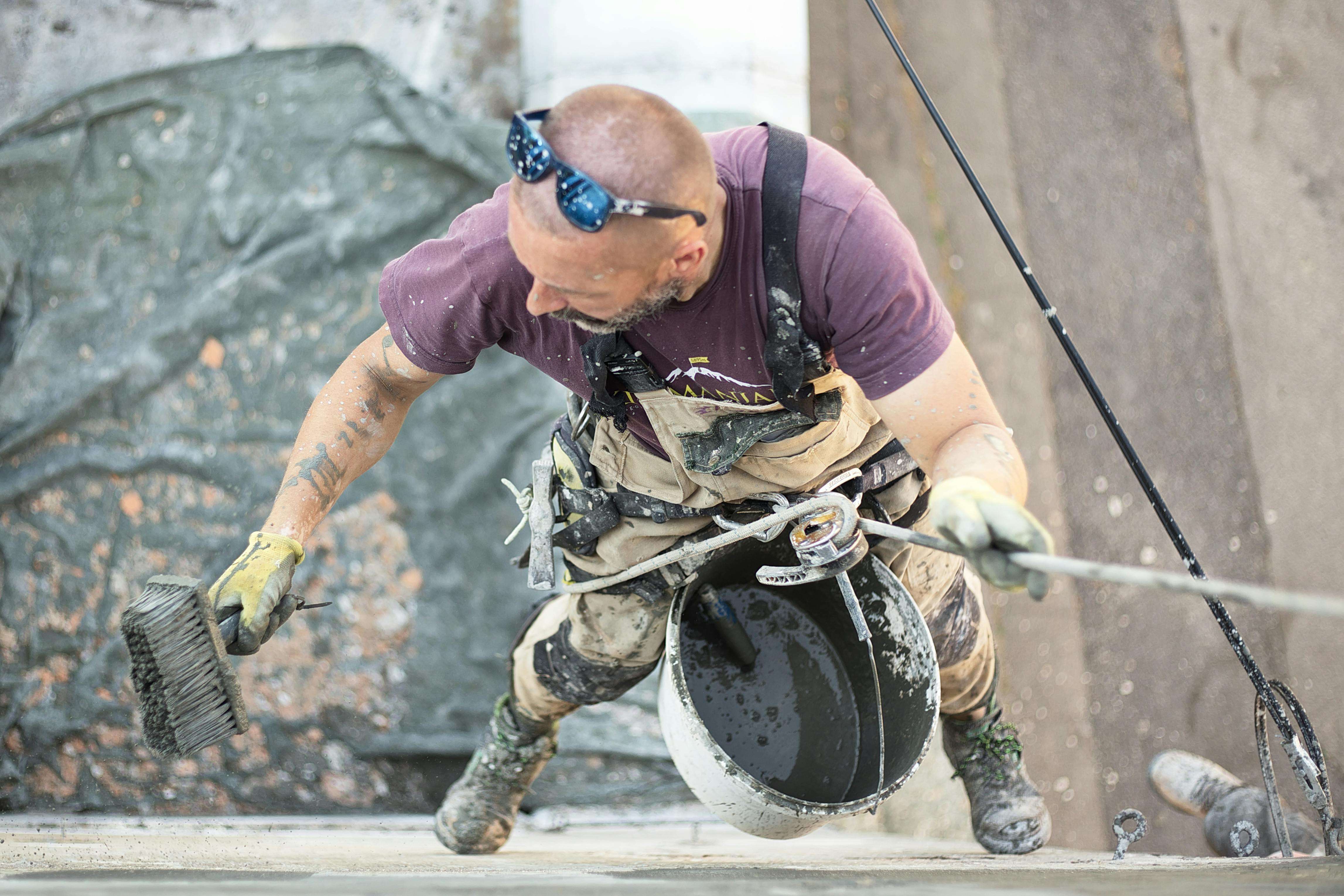
Regency terraces and seafront crescades. The sweeping stucco-fronted terraces of Kemp Town, Brunswick and the seafront are Brighton’s architectural signature. These buildings require cyclical repainting every 5–8 years, stucco crack repair, decorative cornice restoration and balcony ironwork maintenance. The terraces are typically 4–5 storeys, tall enough to make ladder access impractical but not tall enough to justify full scaffold — rope access sits in the sweet spot.
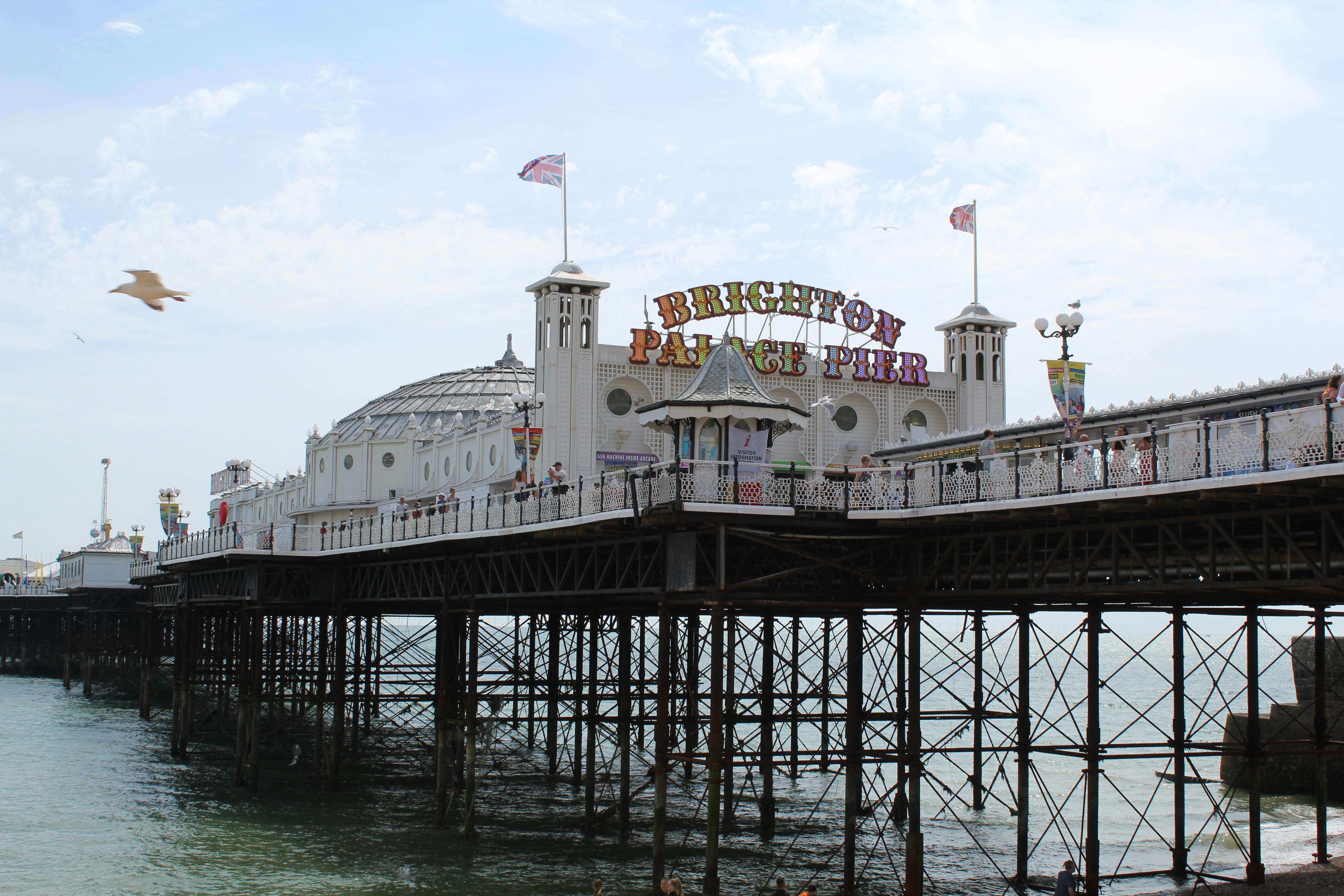
Seafront hotels and commercial buildings. The Grand Hotel, the Metropole (now Hilton) and the seafront’s larger commercial properties need regular facade surveys, render repair and window maintenance. Marine salt spray accelerates deterioration significantly — corrosion cycles on the seafront run roughly twice as fast as equivalent buildings a mile inland.
Listed buildings and conservation areas. Brighton and Hove has over 3,400 listed buildings and 34 conservation areas. Any external work on a listed building requires listed building consent, and scaffold on a prominent frontage can itself trigger additional planning requirements. Rope access is the lowest-impact method of access, which makes planning and conservation officer conversations far simpler.
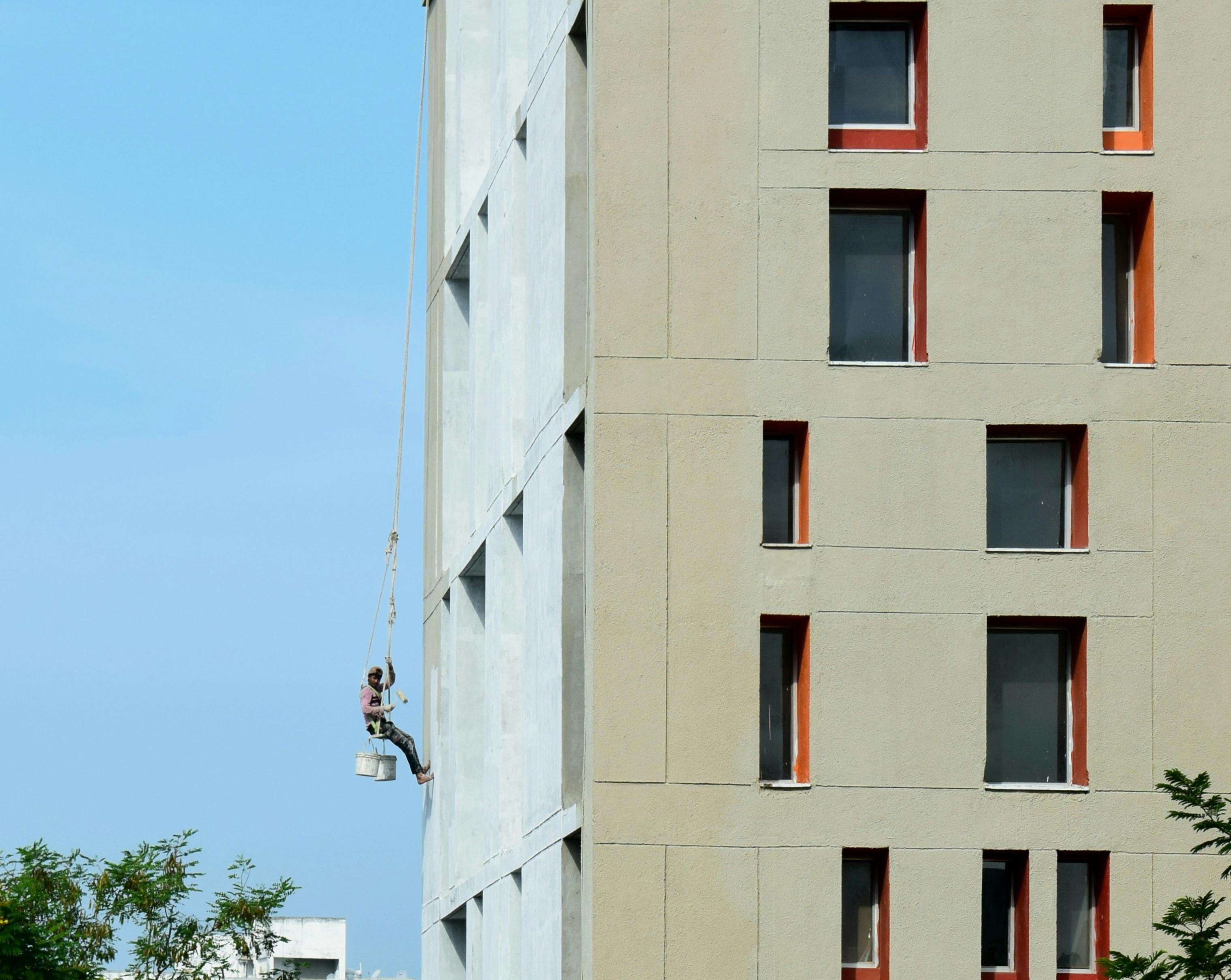
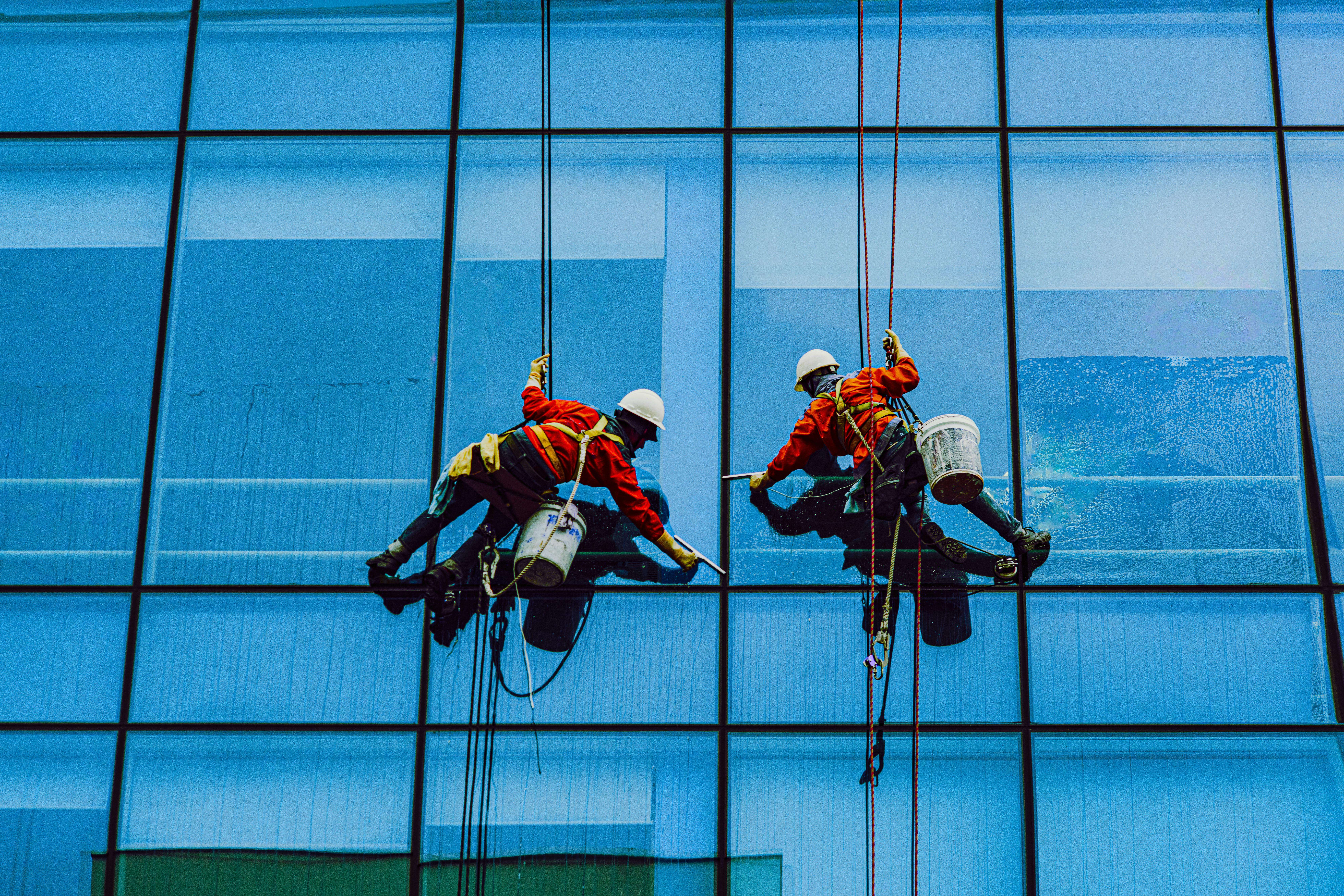
Modern developments. Brighton’s growing stock of modern apartment blocks and commercial buildings — particularly around the marina, New England Quarter and the station area — requires curtain wall maintenance, glazing replacement and sealant renewal. The i360 tower and surrounding developments have added contemporary high-rise access requirements.
University campus buildings. The University of Sussex and University of Brighton have substantial campus estates with a mix of 1960s concrete buildings (requiring concrete repair) and modern structures. Campus maintenance programmes increasingly use rope access to avoid disruption during term time.
Rope Access vs Scaffolding in Brighton
Brighton’s specific characteristics make rope access particularly advantageous:
Narrow streets and limited access. Many of Brighton’s Regency streets — particularly in the Lanes, North Laine and Kemp Town — are narrow, with limited pavement width and no space for scaffold tower footings without closing the road. Rope access eliminates ground-level obstruction entirely.
Seafront wind exposure. The south-facing seafront is exposed to prevailing winds and storm surges. Scaffold on seafront buildings requires additional bracing and wind loading calculations. In severe weather, scaffold can become dangerous and must be inspected after every storm. Rope access has no permanent structure to manage between working periods.
Tourism and pedestrian areas. Brighton’s economy depends on tourism and footfall. Scaffold on a seafront hotel or restaurant frontage during peak season directly affects trade. Rope access work can typically be completed during off-peak hours with no lasting visual impact.
Resident access on terraces. Regency terraces have shared freehold or leasehold structures, with individual flats accessed from a common staircase. Full scaffold around a terrace block can restrict access, block light to lower-floor flats and create security concerns. Rope access avoids all of these issues, which simplifies the consultation process with residents and managing agents.
Cyclical redecoration programmes. Managing agents responsible for Regency terraces run rolling exterior maintenance programmes. Rope access allows them to complete one elevation or one section at a time without committing to a full scaffold wrap — reducing the upfront cost and allowing the work to be phased across financial years.
Common Rope Access Projects in Brighton
- Stucco repair and repainting — crack filling, patch repair and full redecoration of Regency stucco facades
- Decorative ironwork restoration — balcony railings, balustrades, verandas and canopy brackets — rust treatment, repair and repainting
- Stone and render repair — flint wall repointing, stone lintel replacement, render patch repairs on period buildings
- Gutter and rainwater goods — cast iron gutter clearing, downpipe replacement and hopper head repairs on Victorian and Edwardian properties
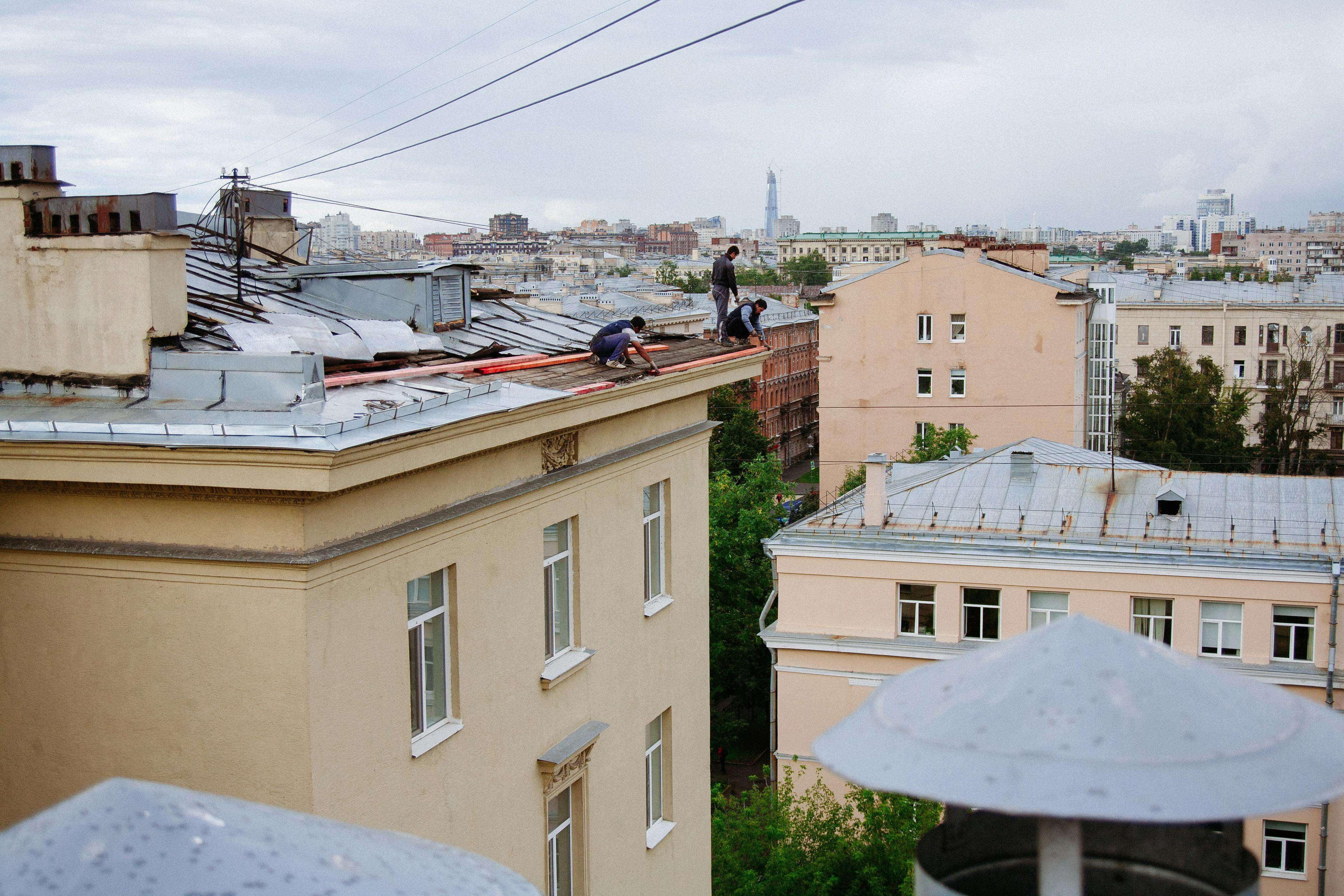
- Roof surveys — close-up inspection of slate, tile and flat roofing from rope access, with photographic condition reports for managing agents
- Window overhaul — draught-proofing, sash cord replacement, putty renewal and timber repair on original sash windows in listed buildings
- Modern facade maintenance — curtain wall cleaning, sealant renewal, glazing replacement on contemporary developments
- Bird proofing — netting and spike installation on commercial and residential buildings, particularly along the seafront where gull nesting is a persistent issue
Areas We Cover from Brighton
Our rope access operators serve Brighton, Hove, Portslade, Rottingdean, Saltdean, Peacehaven and Newhaven. Wider coverage extends across the South Coast to Worthing, Littlehampton, Eastbourne, Lewes, Crawley, Horsham and Haywards Heath.