Where Rope Access Is Used in Liverpool
Liverpool’s combination of active port infrastructure, landmark heritage buildings and new development creates one of the most diverse rope access markets in the UK:
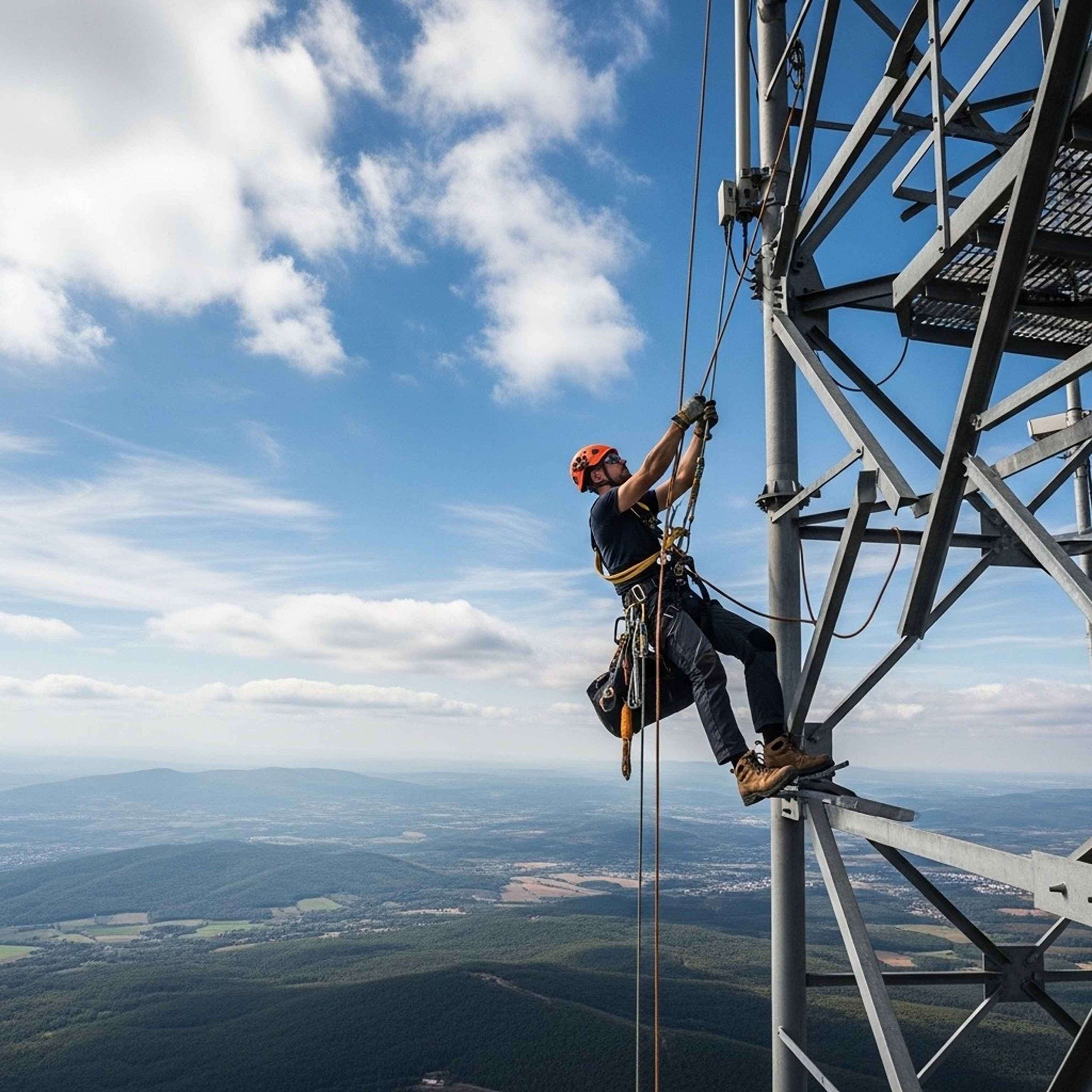
Port and dock infrastructure. The Port of Liverpool is one of the UK’s busiest, handling container freight, bulk cargo and cruise ship operations. Rope access is used year-round for crane inspection and maintenance, dock wall repairs, quayside equipment servicing, cargo handling infrastructure and painting of port structures. The cruise terminal at Pier Head also requires periodic high-level cleaning and maintenance.
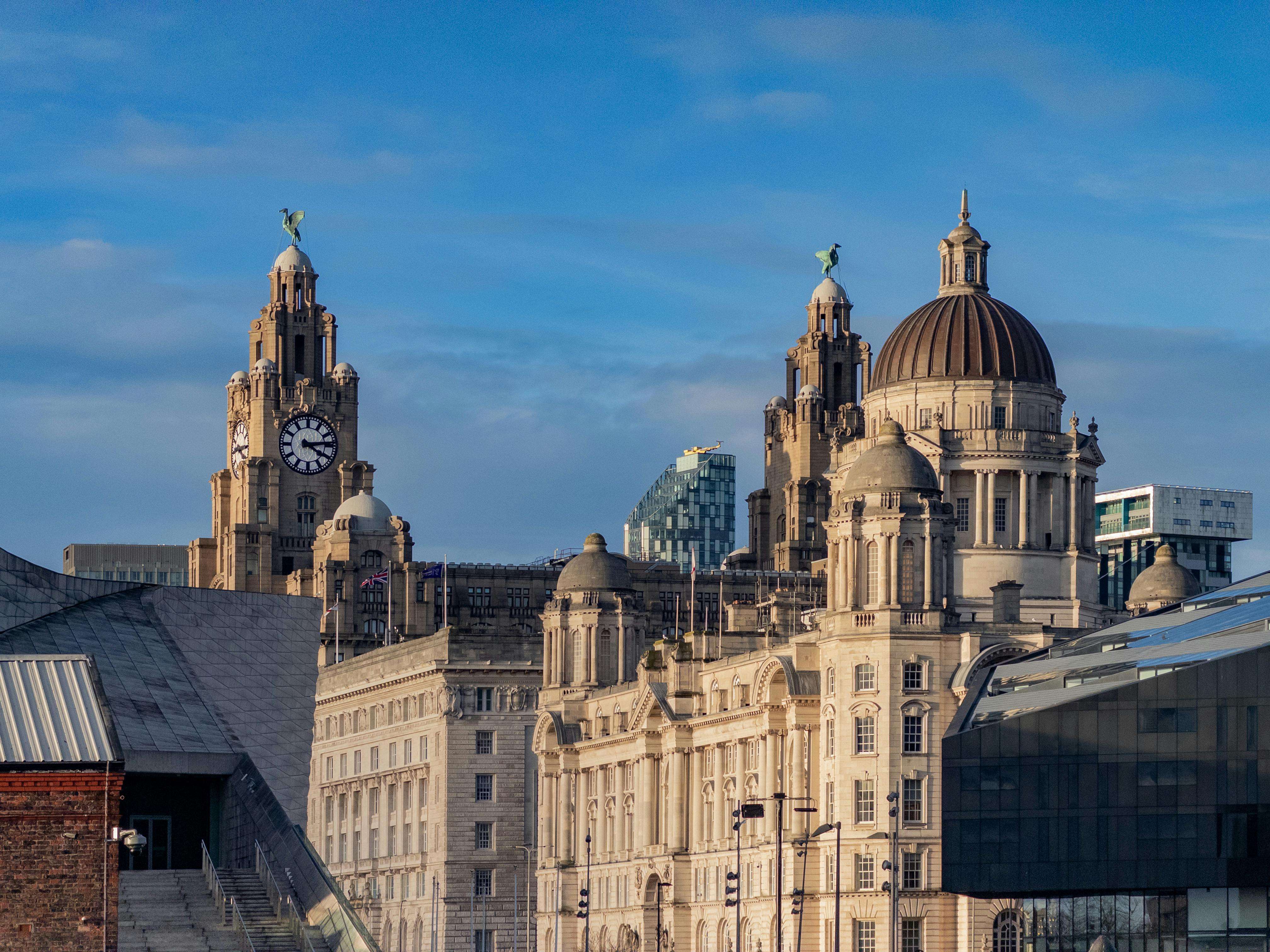
Waterfront heritage buildings. The Royal Liver Building, the Cunard Building and the Port of Liverpool Building — the Three Graces — are Grade I and Grade II* listed and require specialist conservation-grade maintenance. Stone cleaning, repointing, copper dome inspections and rainwater goods replacement on these landmark structures demand rope access technicians experienced in heritage work. Rope access avoids the visual and structural impact of scaffold on these iconic facades.
Royal Albert Dock. The Grade I listed Albert Dock complex is one of the largest collections of listed buildings in the UK. The cast-iron columns, brick warehouses and dock-edge structures need ongoing maintenance — rust treatment, repointing, painting and structural inspections — all delivered by rope access to minimise disruption to the restaurants, museums and businesses that occupy the site.
Stadium construction. Everton’s new stadium at Bramley-Moore Dock is one of the largest stadium projects in the country. Rope access is used during construction for steelwork connections, cladding installation, painting and high-level inspections. Anfield’s ongoing expansion also generates periodic maintenance demand.
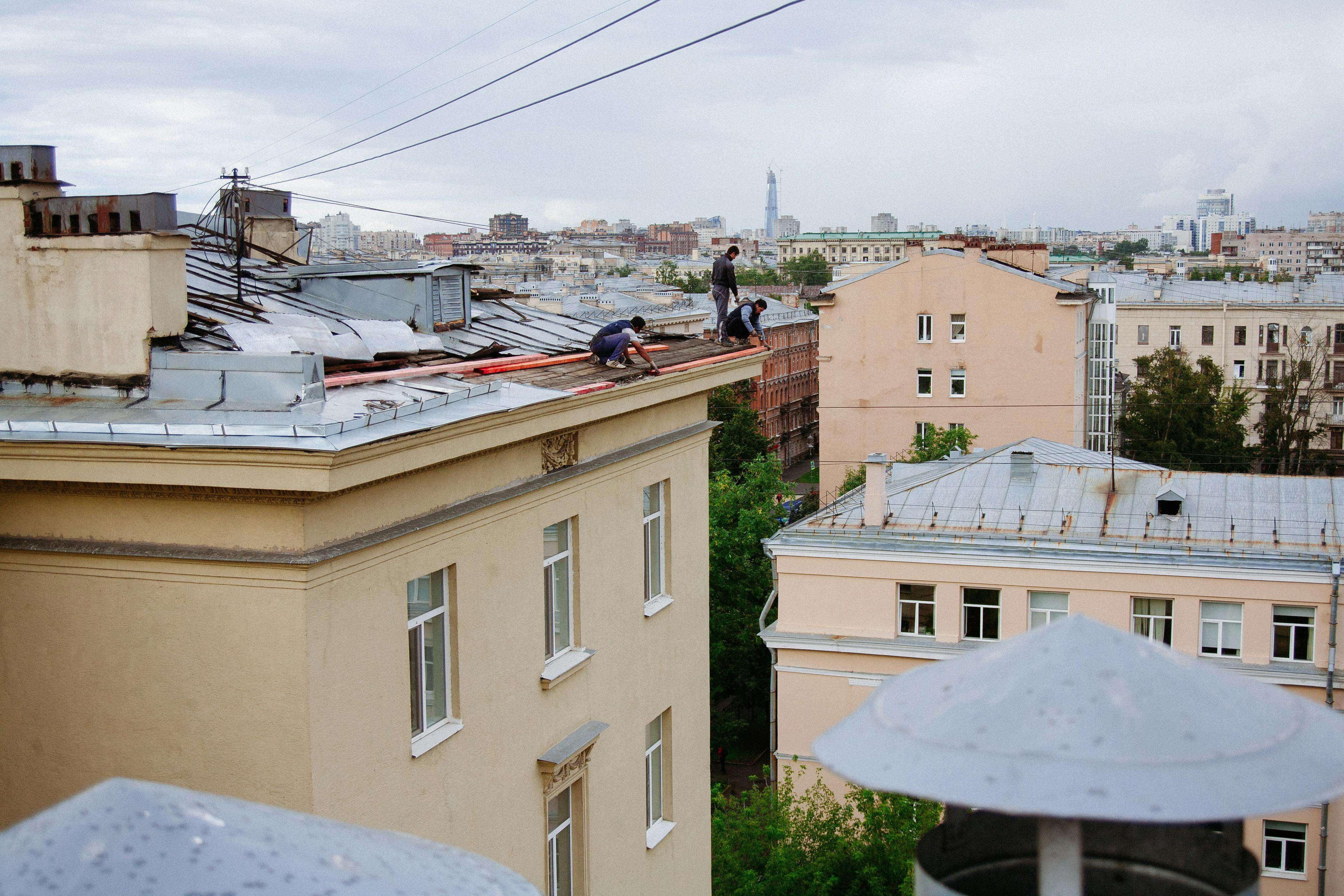
Georgian and Victorian architecture. The Georgian Quarter around Rodney Street, Falkner Square and Canning Street contains some of the finest Georgian townhouses outside London. Bold Street and the commercial centre add Victorian and Edwardian commercial buildings. All require periodic stonework repair, render maintenance, chimney work and roof access — ideally without scaffold obscuring these protected streetscapes.
University campuses. The University of Liverpool, Liverpool John Moores University and Liverpool Hope University collectively maintain a large estate of buildings ranging from Victorian redbrick to modern glass-clad teaching blocks. Rope access allows maintenance during term time without disrupting campus operations.
IRATA training facilities. Liverpool is home to an IRATA-accredited training centre at Brunswick Dock, making the city a hub for rope access training and assessment. This means a strong local pool of qualified technicians.
Rope Access vs Scaffolding in Liverpool
Liverpool has specific characteristics that make rope access the practical choice for at-height work:
Waterfront and dock-edge locations. Many of Liverpool’s most prominent buildings sit directly on the waterfront or adjacent to active docks. Scaffold foundations on quaysides, dock walls and waterside locations present significant engineering challenges and safety risks. Rope access eliminates the need for ground-level support structures entirely.
Heritage and conservation restrictions. The waterfront, Georgian Quarter and much of the city centre fall within conservation areas. Despite the loss of UNESCO World Heritage status, planning controls remain strict. Scaffold on listed building frontages can require additional consent and risks damage to ornamental stonework, cast-iron railings and decorative render. Rope access avoids these issues.
Active port operations. Port infrastructure maintenance must work around vessel movements, cargo operations and strict Health and Safety Executive dock regulations. Rope access teams can work on specific structures without blocking quayside access or requiring crane exclusion zones for scaffold materials.
Busy tourist areas. The waterfront, Albert Dock and city centre attract millions of visitors annually. Scaffold hoarding detracts from the visitor experience and blocks access to businesses. Rope access keeps public areas clear and allows work to proceed with minimal visual impact.
Narrow streets in the commercial centre. Bold Street, Castle Street and the streets around the Town Hall have limited pavement width and heavy pedestrian traffic. Scaffold erection requires pavement closures and pedestrian diversions that are disruptive and costly.
Stadium match-day constraints. Work at Anfield and Bramley-Moore Dock must avoid match days and major event periods. Rope access allows rapid mobilisation and demobilisation — teams can complete targeted work in short windows between events, which is impractical with scaffold.
Common Rope Access Projects in Liverpool
The most frequently requested rope access work across Merseyside includes:
- Port and dock infrastructure maintenance — crane inspections, dock wall repairs, quayside steelwork painting and marine structure maintenance
- Heritage building restoration — stone cleaning, repointing, render repairs and conservation work on the Three Graces, Albert Dock and Georgian Quarter buildings
- Facade cleaning — both modern curtain wall systems and traditional stone, brick and cast-iron facades across the city centre
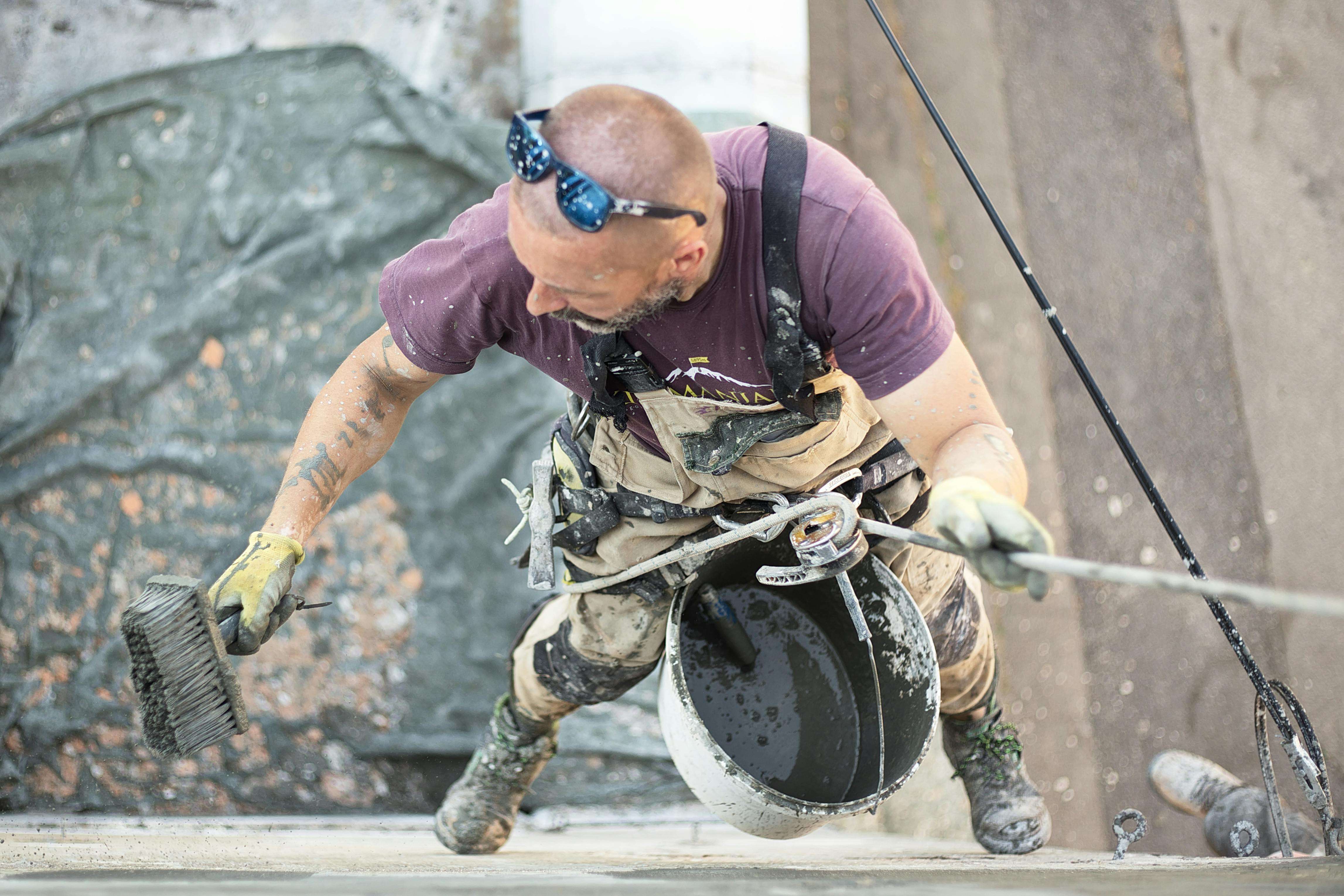
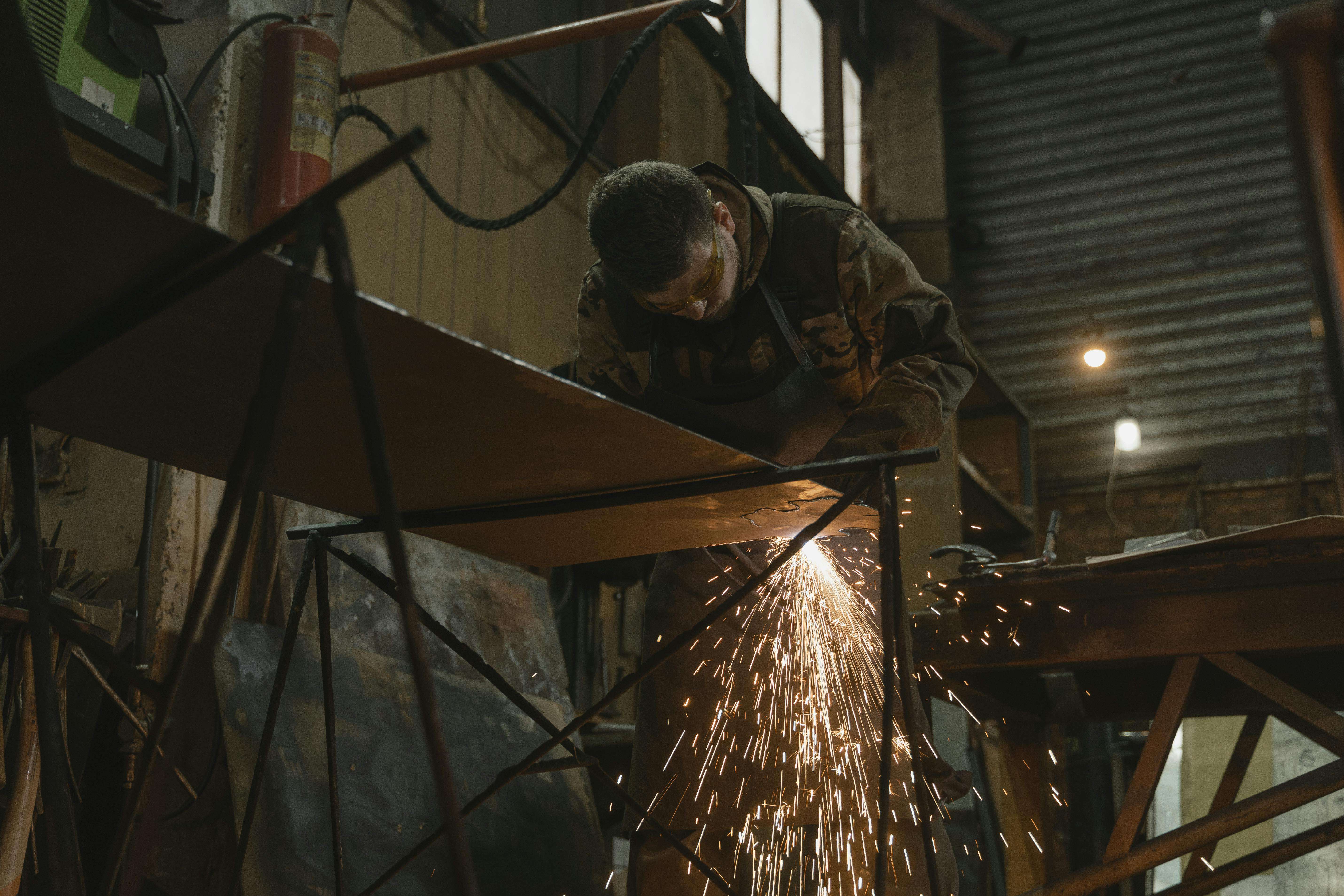
- Industrial painting — protective coatings on port infrastructure, bridges, structural steelwork and industrial plant
- Building surveys and condition reports — close-up facade inspections for structural engineers, conservation architects and building safety managers
- Cladding inspection and remediation — EWS1 surveys and cladding replacement on residential towers
- Concrete repair — spalling concrete on post-war structures, multi-storey car parks and dock infrastructure
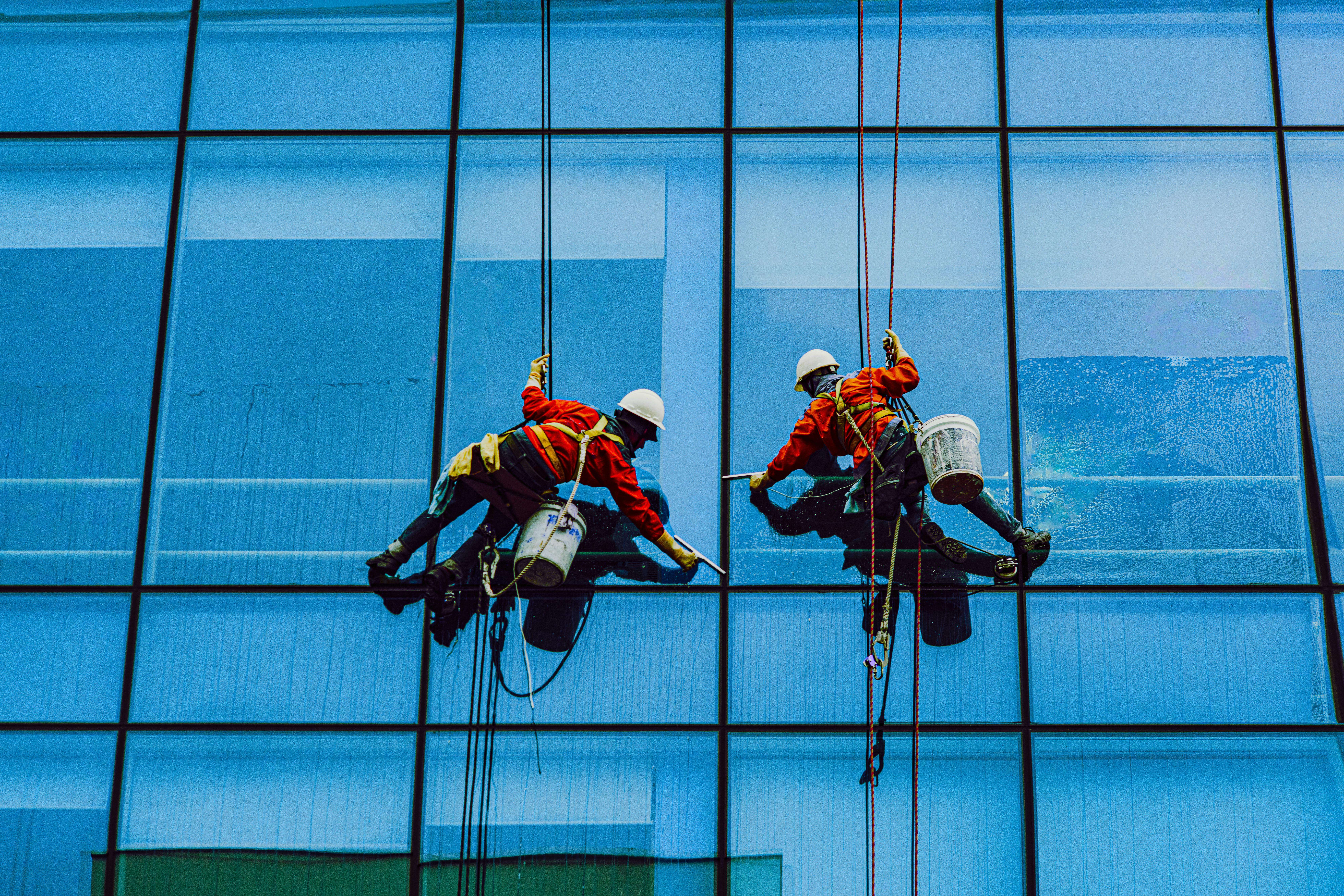
- Window cleaning — high-rise and difficult-access window cleaning on commercial and residential buildings
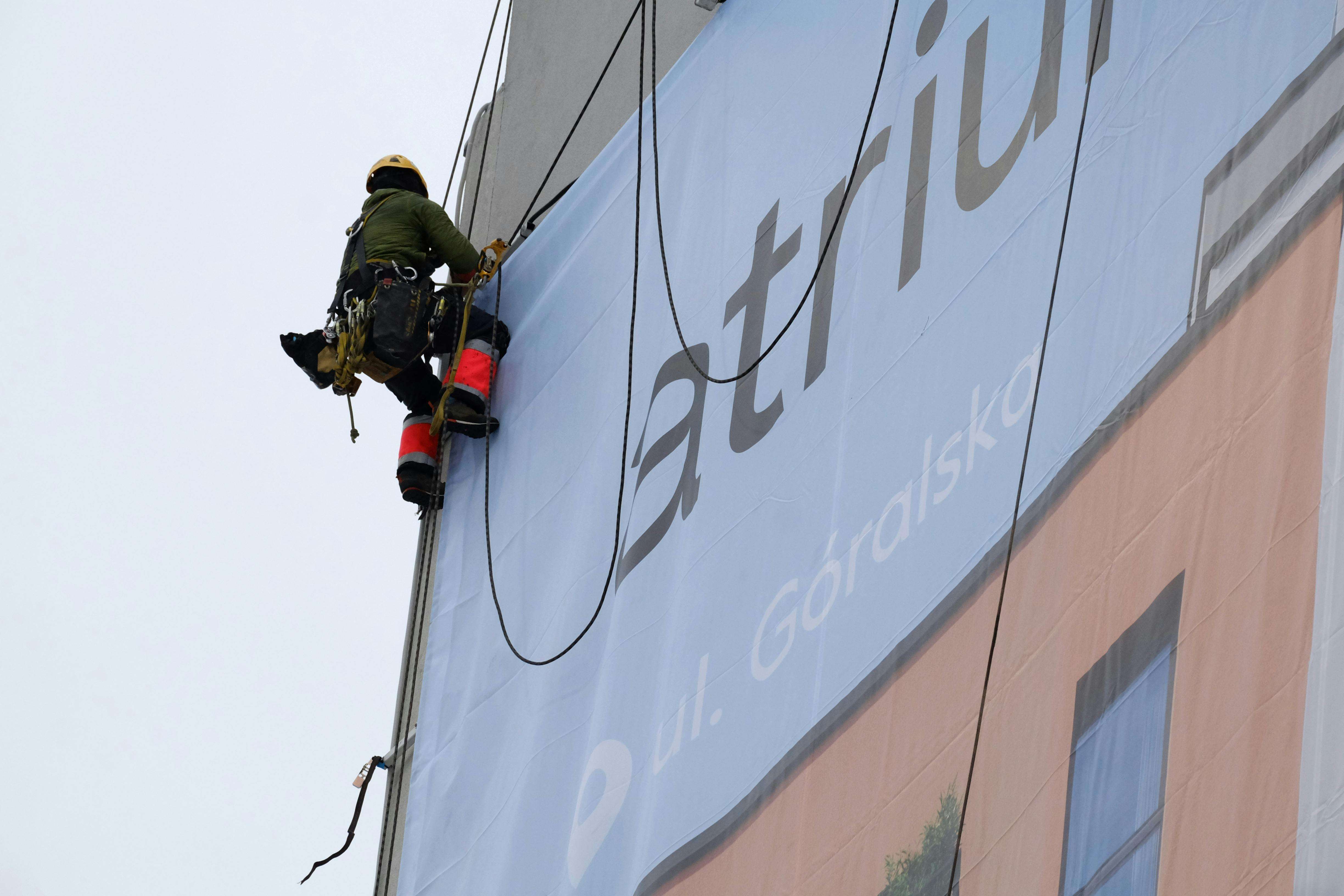
- Signage installation — building branding, commercial signage and wayfinding across the city centre and retail districts
- Lightning protection — installation, testing and repair of conductor systems on tall buildings, churches and port structures
Areas We Cover from Liverpool
Our operators cover Liverpool city centre and the wider Merseyside region. Key areas of activity include Birkenhead, Bootle, St Helens, Widnes, Wallasey, the Wirral peninsula, Crosby, Southport, Runcorn and Ellesmere Port. We also serve the broader North West including Chester, Warrington and towns along the M62 and M57 corridors.