Rope Access Companies in Manchester
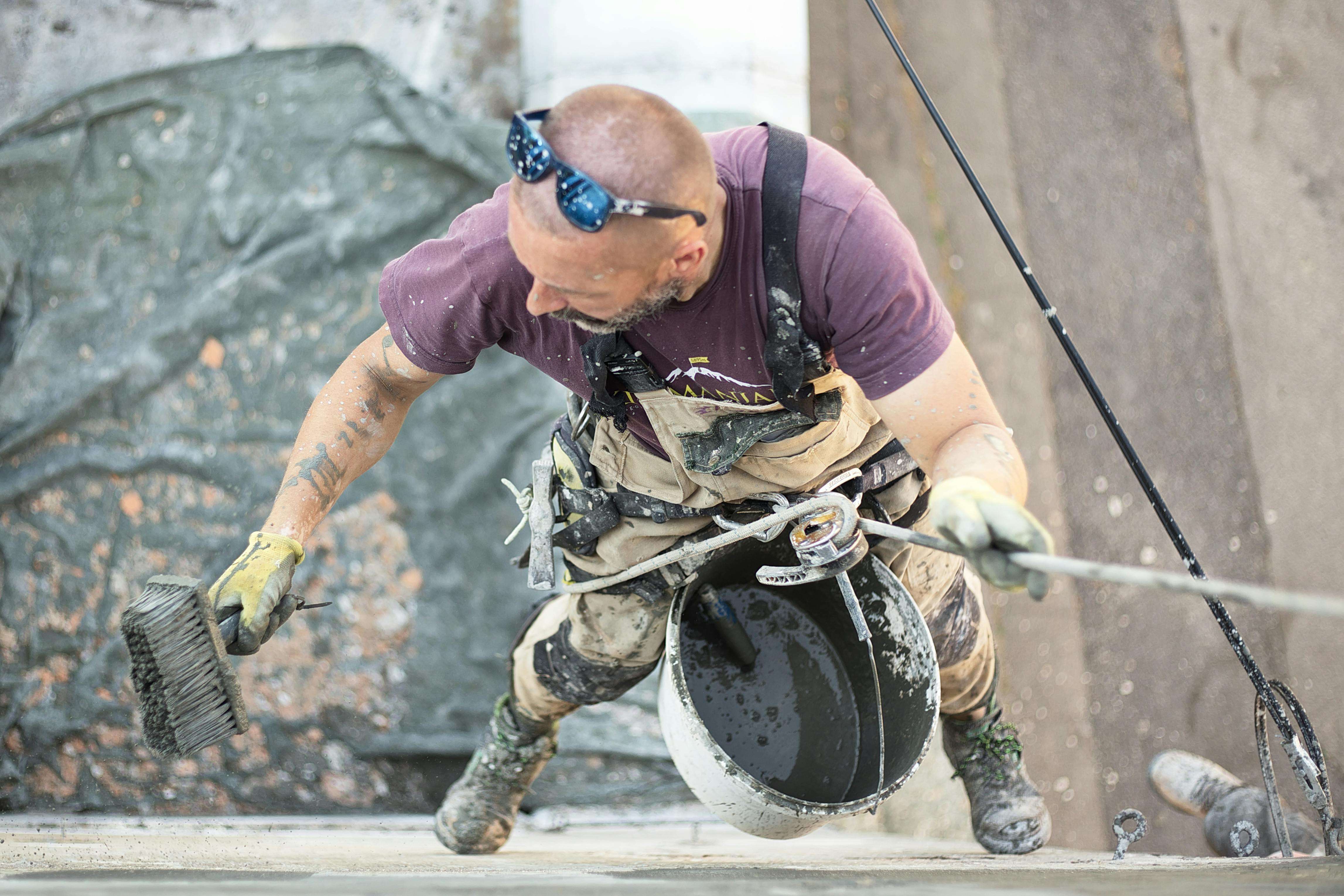
Manchester is served by a range of specialist rope access companies, from IRATA-certified independents operating across the city centre to larger contractors running multiple teams across Greater Manchester. The sector expanded significantly after 2017 as post-Grenfell remediation work created sustained demand that scaffold-based contractors could not absorb at the volumes required.
The market divides into three main types: access-only contractors who provide rope access services to specialist trade subcontractors; facade specialists who combine rope access with trade skills in cladding, glazing, render or masonry; and building maintenance companies that use rope access alongside MEWPs and scaffold as part of a broader planned maintenance offer.
When appointing a rope access company in Manchester, the minimum documentation you should request is: current IRATA certification cards for all operatives (not only the site supervisor), a valid public liability certificate showing at least £5 million cover, employer’s liability insurance, and a site-specific method statement and risk assessment for your building. Companies providing survey reports should also carry professional indemnity insurance.
Our network connects you with vetted rope access companies and facade specialists across Greater Manchester. All operators are pre-screened for qualifications, insurance and safety record.
Where Rope Access Is Used in Manchester
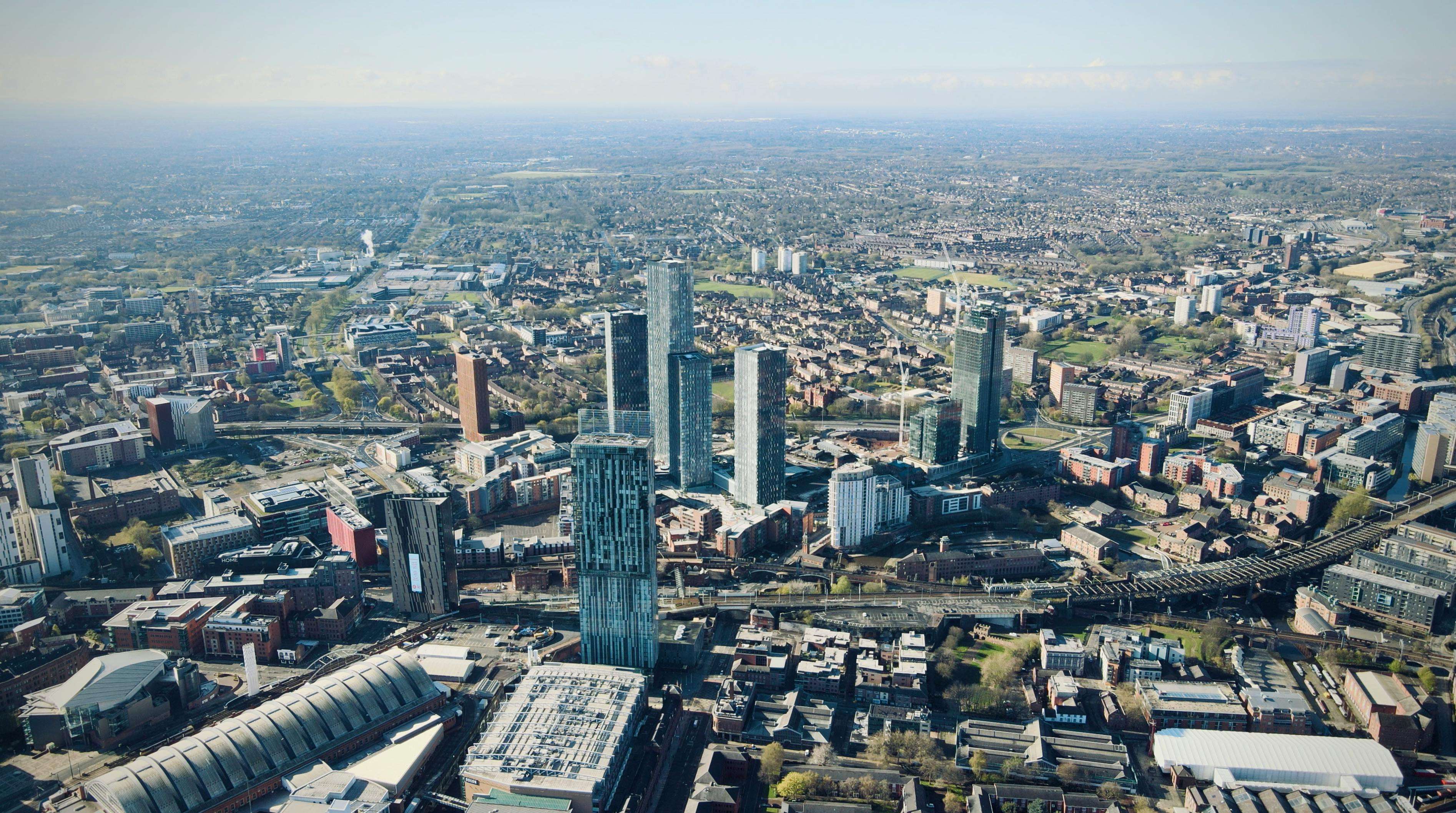
Manchester has the largest high-rise building pipeline outside London, and rope access is embedded across every sector of the city’s built environment:
High-rise residential towers. Deansgate Square’s four towers, the Beetham Tower, Axis Tower, Elizabeth Tower and the growing cluster along Great Jackson Street all require ongoing facade cleaning, curtain wall maintenance and glazing replacements. With dozens more towers in the pipeline, this is a market that will only grow.
Post-Grenfell cladding remediation. Manchester has one of the highest concentrations of affected residential buildings outside London. Hundreds of blocks require EWS1 surveys, ACM cladding removal, replacement cladding installation and fire-stopping works. Rope access is the default delivery method — it allows floor-by-floor remediation without wrapping entire buildings in scaffold, and residents can remain in occupation during works.
Victorian commercial warehouses. The Northern Quarter, Ancoats and Castlefield are dense with converted Victorian cotton warehouses and commercial buildings. These brick and stone facades need repointing, lintel repairs, rainwater goods replacement and stone cleaning. Many sit on narrow streets or pedestrianised areas where scaffold is impractical.
Salford Quays and MediaCityUK. The waterfront campus at MediaCityUK and the surrounding residential and commercial buildings at Salford Quays require regular facade maintenance. Waterside locations make scaffold foundations more complex and expensive — rope access avoids the problem entirely.
University campuses. The Oxford Road corridor is home to the University of Manchester, Manchester Metropolitan University and the Royal Northern College of Music. Campus buildings ranging from 1960s concrete to modern glass facades need maintenance carried out during term time with minimal disruption to teaching and research.
Transport infrastructure. Piccadilly station’s redevelopment, the Metrolink network, railway bridges and the Mancunian Way elevated road all generate demand for rope access inspection, painting and repair work. Rope access minimises lane closures and track possessions compared to scaffold-based methods.
Stadiums and arenas. Old Trafford, the Etihad Stadium, the AO Arena and Co-op Live all require periodic roof inspections, steelwork maintenance, signage installation and high-level cleaning.
Rope Access vs Scaffolding in Manchester
Manchester’s city centre presents specific challenges that favour rope access over traditional scaffolding:
Narrow city centre streets. Deansgate, Cross Street, King Street and much of the Northern Quarter have narrow pavements and restricted road widths. Scaffold erection requires temporary road closures, traffic management orders and pedestrian diversions — all of which need Manchester City Council approval and add weeks to project timescales. Rope access teams set up from the roof.
Busy pedestrian zones. Market Street, Exchange Square, St Ann’s Square and Spinningfields are among the busiest pedestrian areas in the north of England. Scaffold hoarding reduces footfall past retail units and triggers compensation claims from tenants. Rope access keeps the pavement clear.
Occupied residential towers. Manchester’s residential towers are largely build-to-rent or leasehold occupied. Scaffold creates security concerns (providing climb access to balconies), blocks natural light and generates noise from scaffold fitters working at unsociable hours. Rope access avoids all three — critical for building managers trying to maintain resident satisfaction during remediation works.
Speed on cladding remediation. The backlog of post-Grenfell remediation work means building owners and managing agents need contractors who can mobilise quickly. Scaffold erection and dismantle on a 20-storey tower can consume 4–6 weeks of programme time. Rope access teams are typically operational within days of site setup.
Conservation area restrictions. Parts of the city centre, Castlefield and St Ann’s Square fall within conservation areas where scaffold on building frontages may require additional planning consent. Rope access is generally permitted without these approvals.
Weather exposure. Manchester’s rainfall is well documented. Scaffold-based work loses significantly more programme days to weather than rope access, where teams can resume work more quickly after rain and wind events.
Common Rope Access Projects in Manchester
The most frequently requested rope access work across Greater Manchester includes:
- Cladding inspection and remediation — EWS1 surveys, ACM removal, replacement cladding installation and fire-stopping on residential towers
- Facade cleaning — curtain wall washing on modern towers and stone/brick cleaning on Victorian commercial buildings
- Curtain wall maintenance — gasket replacement, seal renewal and drainage clearance on glass-clad high-rises
- Concrete repair — spalling concrete on post-war housing blocks, university buildings and multi-storey car parks
- Glazing replacement — failed double-glazed units, cracked panels and structural glass repairs on high-rise facades
- Facade restoration — stone cleaning, brick repointing, render repair, masonry consolidation and heritage building restoration across the Northern Quarter, Ancoats and Castlefield conservation areas
- Building surveys and condition reports — close-up facade inspection for structural engineers, fire engineers and building safety managers
- Industrial painting — protective coatings on structural steelwork, bridges, gantries and Metrolink infrastructure
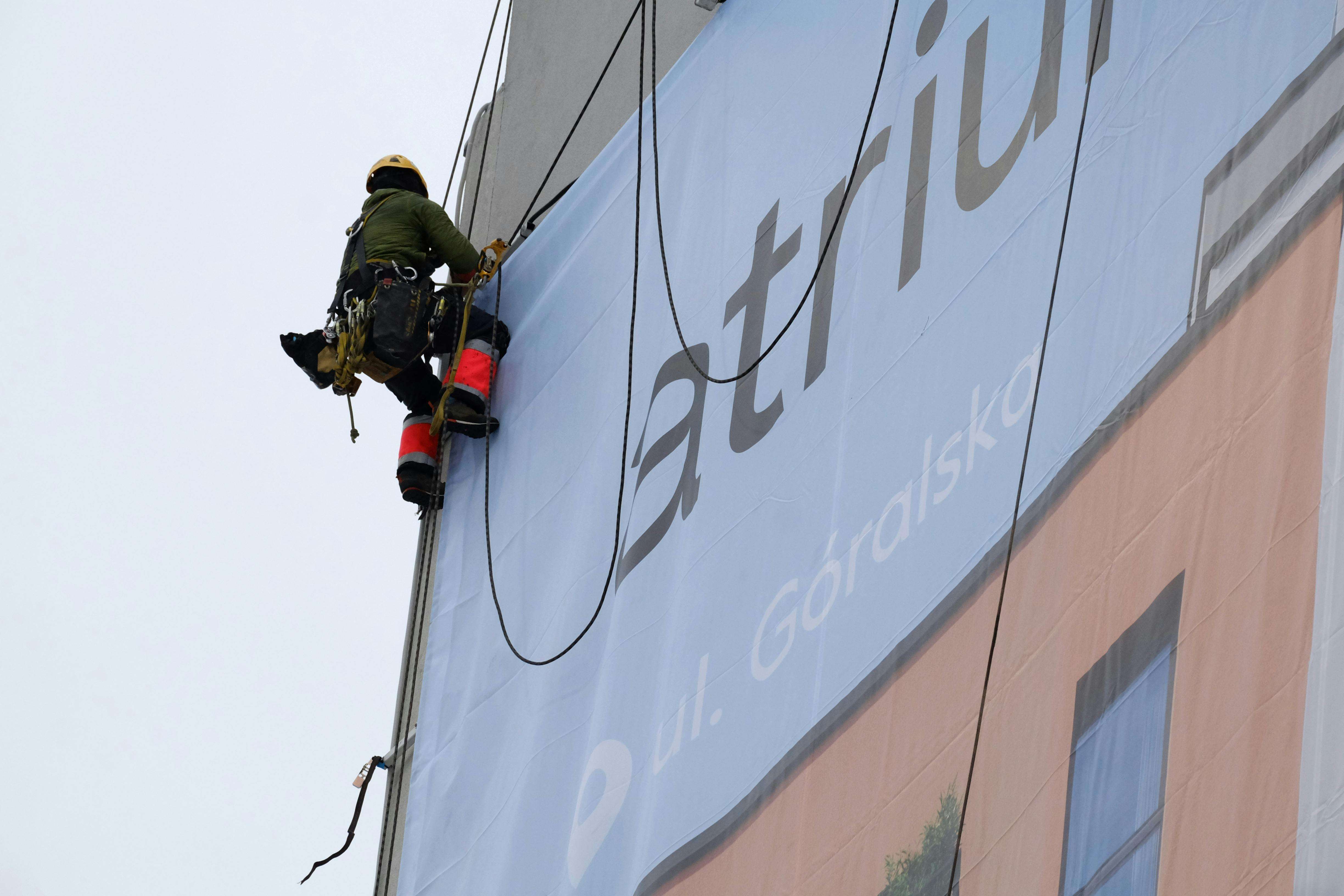
- Signage installation — building branding, commercial signage and wayfinding on towers and retail complexes
- Rope access building maintenance — planned and reactive maintenance covering sealant renewal, gutter clearing, concrete repair, high-level window cleaning and roof edge inspections on Manchester’s growing high-rise stock
- Waterproofing — expansion joint repairs, sealant renewal and weatherproofing on commercial and residential buildings
Working With Manchester Building Owners and Managers
Rope access serves a wide range of building owners, managers and estates teams across Greater Manchester — not only those dealing with cladding remediation, but anyone responsible for the ongoing upkeep of buildings where conventional access is slow, expensive or impractical.
Planned building maintenance programmes. Facilities managers and estates teams running annual maintenance programmes increasingly specify rope access for routine tasks: gutter and drainage clearing on Victorian commercial buildings, high-level window and curtain wall cleaning on city centre towers, concrete repair on post-war housing blocks, sealant surveys and renewal on commercial offices, and protective repainting of structural steelwork and metalwork. Rope access allows these tasks to be batched into efficient site visits without the mobilisation cost of scaffold.
University and education campuses. The Oxford Road corridor generates consistent demand for maintenance access during term time. Rope access allows work to be carried out on occupied buildings with minimal disruption to teaching spaces, and avoids the planning constraints that can delay scaffold erection on campus conservation buildings.
Transport and infrastructure operators. Network Rail, Transport for Greater Manchester and Highways England all use rope access for bridge, viaduct, gantry and station inspection and repair work. The method reduces lane closures, track possessions and programme time compared to scaffold-based alternatives.
Building safety and cladding remediation. The Building Safety Act 2022 introduced binding obligations on Accountable Persons for higher-risk residential buildings above 18 metres. Manchester has one of the largest concentrations of affected buildings outside London. A credible EWS1 assessment requires close-up physical inspection — rope access places the assessor directly at the facade, enabling fire-stopping deficiencies, cavity barriers and cladding fixings to be examined floor by floor. Rope access also makes periodic re-inspection economically viable between major remediation phases.
Contractor procurement checklist. When appointing any rope access contractor, request: IRATA certificates for all operatives (not just the site supervisor), current insurance certificates (minimum £5m public liability), a site-specific method statement and risk assessment, and confirmation of the company’s accident frequency rate. All operators in our network are pre-vetted against these criteria before being accepted.
Areas We Cover from Manchester
Our operators and facade specialists cover Manchester city centre and all of Greater Manchester. Key districts and towns:
Inner Manchester and Salford: Ancoats, Castlefield, Deansgate, the Northern Quarter, Spinningfields, St Ann’s, Hulme, Ardwick, Salford, Salford Quays, MediaCityUK.
South and west: Stretford, Trafford, Sale, Altrincham, Eccles, Worsley, Irlam, Walkden, Swinton, Leigh, Wigan and Tyldesley.
North and north-east: Oldham, Royton, Chadderton, Shaw and Crompton, Failsworth, Heywood, Bury, Tottington, Prestwich, Rochdale and Littleborough.
East and south-east: Tameside, Stalybridge, Dukinfield, Audenshaw, Mossley, Denton, Stockport, Cheadle Hulme and Marple.
Further afield: Bolton, Warrington, Macclesfield, Knutsford and towns along the M62 and M60 corridors.