What Is Rope Access Bird Proofing?
Birds on commercial buildings cause more damage and expense than most building managers expect. Pigeons, gulls, and starlings foul facades, block gutters, damage roofing materials, create health hazards, and generate noise complaints from tenants. The problem gets worse over time — once birds establish a roosting or nesting site, they return year after year in growing numbers.
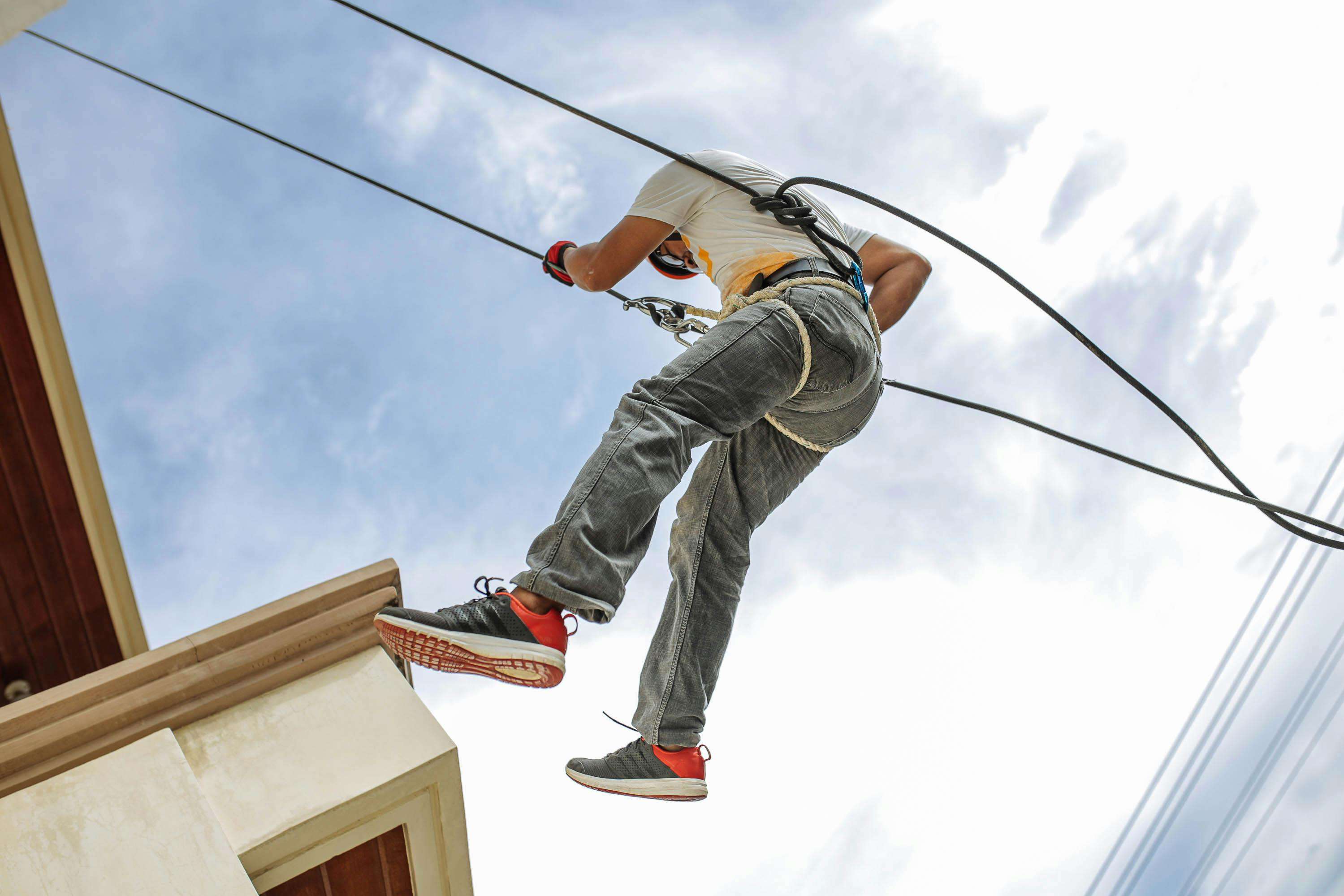
Rope access bird proofing means IRATA-certified technicians install deterrent systems — netting, spikes, wire systems, optical gels, or electric tracks — directly at height, without scaffolding or cherry pickers. For buildings where the problem areas are at upper levels, parapets, roof edges, plant rooms, or facade features, this is by far the most practical and cost-effective installation method.
The work itself is usually straightforward. The challenge is getting a person and their materials to the right location safely and efficiently. That’s where rope access earns its keep. A team that would need two weeks of scaffold to install netting on a ten-storey building’s upper three floors can do the same job in two or three days by rope.
The Problem with Birds on Buildings
If you manage a commercial property with a bird problem, you already know the symptoms. Here’s what’s actually going on and why it matters.
Fouling and hygiene. Pigeon droppings are acidic and carry bacteria including Salmonella, E. coli, and the fungal spores that cause histoplasmosis and cryptococcosis. Heavy fouling on walkways, fire escapes, window sills, and air intake areas creates genuine health risks for building occupants. In food preparation, healthcare, or pharmaceutical environments, bird fouling near air handling units can be a compliance issue.
Gutter and drain blockage. Nesting material, feathers, and droppings accumulate in gutters and around roof drainage outlets. Blocked gutters lead to water overflow, facade staining, and — eventually — water ingress and internal damp. We see buildings regularly where the root cause of a damp problem turns out to be bird-related gutter blockage.
Physical damage to building fabric. Pigeon and gull droppings are corrosive enough to etch stone, degrade paint finishes, and attack roofing felts and membranes. Nesting birds tear at insulation, flashings, and sealants to build nests. Gulls in particular can pull up flat roof coverings and damage ridge tiles.
Noise complaints. A gull colony on a commercial roof during breeding season is genuinely loud. Early-morning screeching and aggressive behaviour near building entrances generates complaints from office tenants, hotel guests, and residential neighbours. For hospitality businesses, it directly affects guest experience and online reviews.
Secondary insect infestations. Bird nests harbour mites, fleas, and beetle larvae. When birds leave a nest, these insects migrate into the building looking for new hosts. A bird problem on the roof can become a pest control problem several floors below.
Deterrent Options
There’s no single bird proofing solution that suits every situation. The right approach depends on the bird species, the nature of the problem (roosting vs nesting vs perching), the building features involved, and the budget. Here’s what’s available.
Netting
Bird netting is the most effective way to physically exclude birds from an area. It’s a permanent barrier — if the net is intact and properly fitted, birds simply cannot get in.
Where it’s used: large open areas like loading bays, covered car parks, light wells, internal atriums, undercroft areas, and recessed sections of facades. Netting is the go-to solution for pigeon exclusion from semi-enclosed spaces.
How it works: Polyethylene or polypropylene netting (typically 50mm mesh for pigeons, 19mm for starlings and sparrows) is stretched across the opening and fixed to the building structure with stainless steel wire rope, tensioners, and fixing pins. On large spans, intermediate catenary wires support the net.
Durability: Good quality UV-stabilised netting lasts 10-15 years. The fixings last longer. Maintenance mainly involves periodic inspection for damage — birds occasionally damage nets, as do maintenance workers who cut through them to access plant and then don’t repair the hole.
Rope access advantage: Netting installations on upper floors, high-level loading bays, and exposed facades would typically require full scaffold — costing thousands before the netting contractor even starts. Rope access teams install the fixing framework and net from the ropes, dramatically cutting overall project cost.
Spike Systems
Post-and-wire spike strips prevent birds from landing on ledges, sills, parapets, signage, and other flat or near-flat surfaces.
Where they’re used: window sills, ledges, parapet copings, signage tops, pipework, gutters, and any narrow perching surface. Spikes work well for pigeons and most medium-sized birds. They’re less effective against smaller species like starlings.
How they work: Stainless steel pins (blunted — they’re a deterrent, not a weapon) set into a UV-stabilised polycarbonate base. The base is fixed to the substrate with silicone adhesive or mechanical fixings. The pins create an uneven surface that birds can’t comfortably land on.
Durability: Stainless steel spikes last 15-20 years with virtually no maintenance. The base strip may need replacing before the pins do.
Cost: Spike systems are among the cheapest deterrents per linear metre. Material costs are low, and installation is quick — a rope access technician can fit a lot of spike strip in a day.
Wire Systems
Post-and-wire (or spring-wire) systems use tensioned stainless steel wire strung between small posts to create an unstable landing surface. Birds attempt to land, the wire moves under their weight, and they move on.
Where they’re used: ledges, parapets, and copings where spikes would be too visually intrusive. Wire systems are much less visible than spikes — from ground level, they’re essentially invisible. They’re the preferred option for listed buildings, heritage properties, and any building where aesthetics matter.
How they work: Small stainless steel posts (typically 75-100mm high) are fixed at intervals along the ledge. Spring-loaded stainless steel wire is strung between them under light tension. When a bird lands on the wire, it flexes and destabilises the bird.
Durability: 10-15 years for the wire; longer for the posts. The springs can weaken over time and may need occasional retensioning.
Optical Gel
Optical gel (often sold under brand names like Bird Free) is a relatively recent deterrent that works on multiple senses. The gel dishes emit UV light that birds perceive as flames, combined with a scent (peppermint oil, typically) that birds find unpleasant.
Where it’s used: ledges, sills, parapets, and signage where visual impact must be minimal. The gel dishes are small (about 8mm high) and practically invisible from below.
How it works: Small pre-loaded gel dishes are glued to the surface at regular intervals. The gel doesn’t dry out and remains active for several years.
Durability: Manufacturers claim 3-5 years per application. Dishes may need replacing sooner on south-facing surfaces exposed to intense sun. Compared to mechanical systems, the ongoing replacement cost is a consideration.
Limitations: Optical gel works well as a perching deterrent but won’t stop determined nesting birds. It’s best for low-pressure situations — occasional perching rather than established colonies.
Electric Deterrent Track
Low-voltage electric track systems deliver a mild shock when birds land, conditioning them to avoid the area.
Where it’s used: ledges, parapets, and roof edges, particularly on prestige buildings where visible deterrents are unacceptable. Electric track has the lowest visual profile of any mechanical deterrent.
How it works: A flexible track containing two conductors is adhesive-bonded to the surface and connected to a small solar-powered energiser. When a bird lands across both conductors, it receives a harmless but unpleasant shock.
Durability: The track itself lasts 10+ years. The energiser may need replacement or battery changes. The system requires occasional testing to confirm it’s still delivering current.
Cost: Higher material and installation cost than spikes or wire, but justified on high-value properties where aesthetics are critical.
Legal Considerations
Bird proofing work in the UK is governed by the Wildlife and Countryside Act 1981, and getting this wrong can result in criminal prosecution.
All wild birds, their nests, and eggs are protected. You cannot legally destroy or disturb an active nest (one being built, containing eggs, or with chicks) of any species. This applies regardless of how inconvenient the nest location is.
General licences allow control of certain species — including feral pigeons, woodpigeons, and some gull species — but only under specific conditions and for specific reasons (preventing serious damage to property, preventing spread of disease, preserving public health). The licences don’t permit unlimited control, and they don’t apply during active nesting.
Herring gulls and lesser black-backed gulls have additional protections. In many areas, you cannot remove or disturb their nests at all without a specific licence from Natural England (or the equivalent body in Scotland, Wales, or Northern Ireland). This has practical implications: if you have nesting gulls and want to install proofing, the work either needs to happen outside breeding season or you need professional advice on licensing.
Timing matters. The nesting season broadly runs from March to August, though some species start earlier and finish later. The practical advice is simple: if you know you need bird proofing, get it done between September and February. Once birds are nesting, your options are severely limited until the young have fledged and left.
Any reputable bird proofing contractor will advise on the legal position and help you plan the work to avoid compliance issues. If a contractor suggests removing active nests without mentioning licensing requirements, find a different contractor.
Which Solution for Which Species?
Pigeons are the most common problem species on commercial buildings. They’re persistent, they breed year-round (with a peak in spring), and once they establish a site they’re difficult to shift without physical exclusion. Netting is the most reliable solution for enclosed areas. Spikes, wire, and electric track work well for open ledges and perching surfaces.
Herring gulls and lesser black-backed gulls are a growing problem in UK towns and cities. They’re large, aggressive during breeding season, and legally protected. Physical deterrents (spikes, wire) on nesting ledges help, but gulls are heavy enough to bend lightweight spike systems. Heavy-duty marine-grade spikes or netting are usually needed. Roof-level netting over flat roof areas can prevent nesting, but installation is a significant project.
Starlings roost in huge numbers on buildings during autumn and winter. The sheer volume of droppings from a starling roost is extraordinary. Netting with smaller mesh (19mm) is needed — standard pigeon netting won’t exclude them. For open ledges, electric track or gels are more effective than spikes, which starlings can navigate around.
House sparrows cause problems mainly through nesting in building cavities, gaps in cladding, and behind signage. Proofing against sparrows means blocking entry points with netting or mesh. The mesh size needs to be small enough (19mm or less) to exclude a very small bird.
Costs and Pricing
Bird proofing costs vary enormously depending on the system type, area to be covered, height, and building complexity. Here are some rough guides for rope access installation.
Spike systems: Material costs run from around 5-15 per linear metre depending on quality. Installation by rope access typically adds 20-40 per linear metre. A building with 200m of ledges might cost 5,000-10,000 fully installed.
Wire systems: Similar to spikes in terms of installation cost, but materials are slightly higher — typically 15-25 per linear metre for the post-and-wire system.
Netting: Priced by square metre. Material costs are roughly 5-15 per square metre for the net itself, but the fixing framework (wire rope, tensioners, fixings) adds significantly. Fully installed costs typically run 30-60 per square metre including the rope access. A large loading bay might be 200-400 square metres.
Optical gel: Around 50-70 per linear metre installed, including the gel dishes.
The scaffold comparison: For bird proofing work at height, the scaffold cost often exceeds the cost of the bird proofing materials and installation combined. On a typical six-to-eight-storey building, scaffold erection and hire for a two-week proofing project might cost 8,000-15,000 on top of the actual bird proofing work. Rope access eliminates that cost entirely.
Maintenance and Inspection
Bird proofing systems aren’t fit-and-forget. They need periodic inspection to remain effective.
Netting should be inspected annually for damage — holes, sagging, detached fixings, and any birds that have found a way in. Damaged sections need prompt repair; a single hole in a pigeon net will be found and exploited within days.
Spikes and wire systems need checking for damage (bent pins, broken wires, loose posts) and clearing of accumulated debris. Over time, dust and cobwebs can fill spike systems to the point where birds can nest on top of them.
Gel deterrents need replacing every 3-5 years, or sooner if they’ve degraded.
Rope access is the obvious choice for these inspections, since the proofing systems are at height and the inspection takes far less time than any scaffold-based approach would justify.
Health and Safety
Bird proofing work combines two significant hazard categories: work at height and exposure to bird-related biological hazards. When you engage a rope access contractor for bird proofing, expect the following:
- IRATA certification for all rope access technicians. This is non-negotiable.
- Appropriate PPE for bird fouling — at minimum, FFP3 respiratory protection when disturbing dry bird droppings (which release airborne fungal spores), disposable overalls, and gloves. Heavy fouling may require damping down before removal.
- A site-specific risk assessment and method statement covering both the access and the biological hazards.
- Waste disposal — bird fouling and nesting material is classified as controlled waste and should be bagged, sealed, and disposed of properly. It shouldn’t be swept off the building or left in general waste bins.
- Public liability and employers’ liability insurance appropriate for the work.
Get a Quote
If birds are causing problems on your building, we can connect you with experienced rope access contractors who specialise in bird proofing installation and maintenance. All operators in our directory are IRATA-certified, fully insured, and knowledgeable about the legal requirements around bird control. Submit a quote request with details of your building and the bird problem, and we’ll match you with suitable contractors in your area.