What Is DOFF & TORC Cleaning?
DOFF and TORC are two specialist facade cleaning systems developed specifically for situations where conventional pressure washing would cause damage. They are the go-to methods for cleaning natural stone, heritage masonry, brick, terracotta, and other sensitive building materials.
DOFF is a superheated water system. It delivers steam at temperatures up to 150 degrees Celsius but at very low pressure — typically around 3-5 bar at the nozzle. The heat does the cleaning work, not the pressure. This makes it highly effective at removing paint, biological growth, carbon deposits, and general soiling without blasting the surface of the substrate. Because the water volume is low and the temperature is high, surfaces dry remarkably quickly — often within minutes.
TORC is a vortex cleaning system. It mixes a fine calcium carbonate granulate with low-pressure air and a gentle water mist, creating a swirling vortex at the nozzle that gently abrades contaminants away from the surface. The granulate is softer than most building stones, so it removes soiling without scratching or eroding the substrate. TORC is particularly effective on delicate carved stonework, polished surfaces, and materials that even steam cleaning could affect.
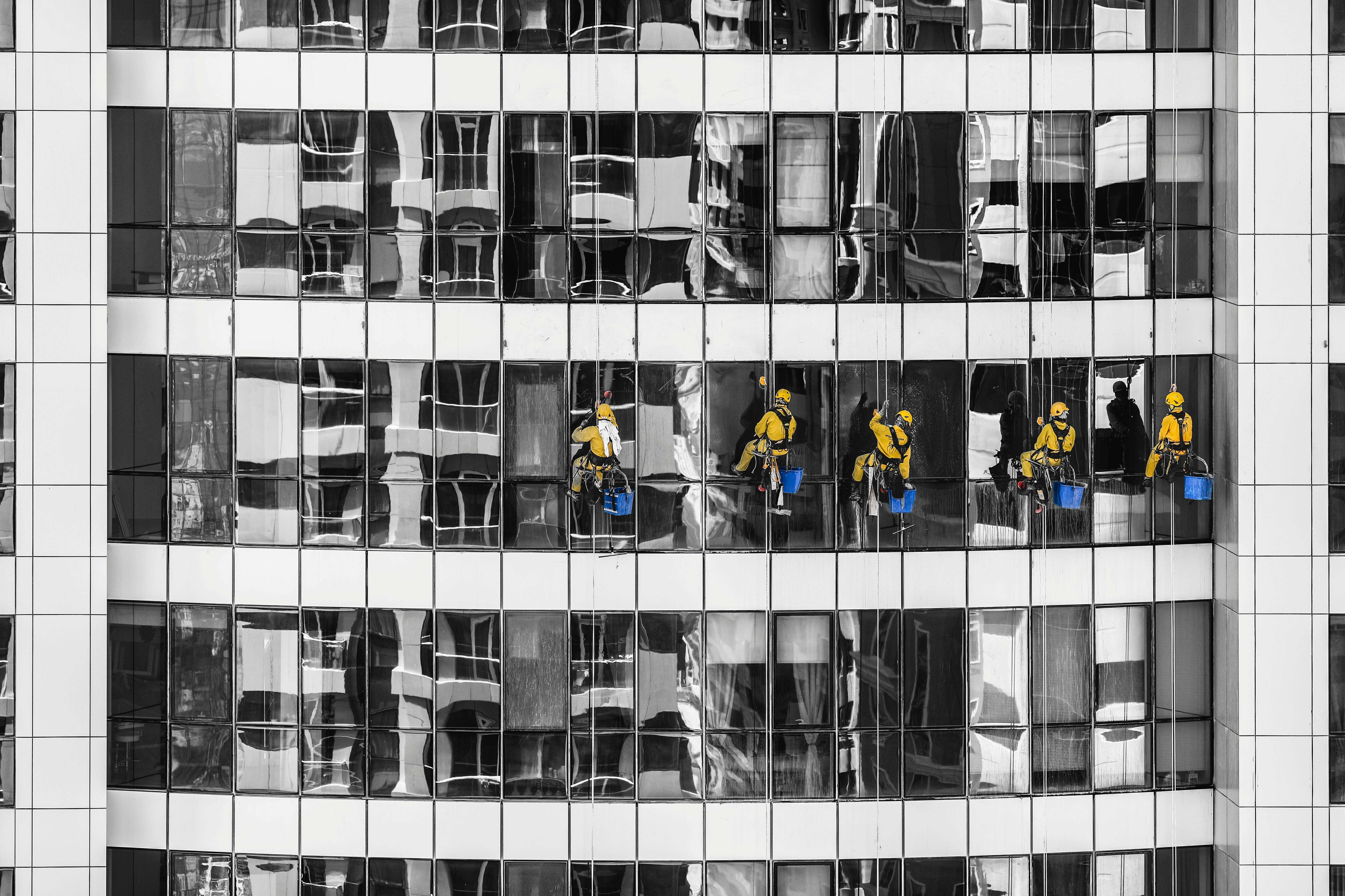
Rope access and these cleaning systems are a natural pairing. Both DOFF and TORC require the operator to work close to the surface, controlling the nozzle angle and distance carefully for consistent results. A rope access technician can maintain exactly the right working distance across an entire facade, following the contours of the building in a way that scaffold-based operatives can match but at far greater cost.
When to Use DOFF vs TORC
Choosing between the two systems depends on the substrate, the type of soiling, and what the conservation officer or specifier requires.
Use DOFF for:
- Paint removal from stone and brick — DOFF excels at softening and lifting old paint layers from masonry. Multiple paint layers that have built up over decades can be removed back to bare stone without mechanical scraping.
- Biological growth — algae, moss, lichen, and fungal growth on stone, brick, render, and concrete. The high temperature kills organisms at the root, reducing regrowth compared to cold pressure washing.
- Carbon soiling — the black encrustation on stone buildings caused by decades of atmospheric pollution. Particularly common on sandstone and limestone in urban areas.
- Graffiti removal — DOFF can remove many graffiti types from porous substrates without the need for chemical strippers.
- Preparing surfaces for repointing or coating — removing loose material and contamination before mortar or paint application.
- Chewing gum and general street-level grime — DOFF is widely used on pavements and street furniture, but on buildings it is equally effective.
Use TORC for:
- Delicate carved stonework — where even low-pressure steam could erode fine detail. TORC’s gentle vortex action cleans around and into carved features without rounding edges.
- Polished stone surfaces — granite, marble, and polished limestone where any abrasion would dull the finish. The fine calcium carbonate granulate is too soft to scratch these materials.
- Terracotta and faience — glazed architectural ceramics that can be damaged by thermal shock from steam. TORC’s ambient temperature operation avoids this risk entirely.
- Very soft stone — some limestones and sandstones are soft enough that even low-pressure water can erode them over time. TORC provides a completely dry option (the water mist is minimal).
- Conservation-grade cleaning — where the specification requires the most gentle method available. Many conservation architects default to TORC for Grade I listed buildings and scheduled monuments.
In many projects, both systems are used on different parts of the same building. The main facades might be DOFF cleaned for efficiency, while carved cornices, window surrounds, and ornamental features are TORC cleaned for precision. A skilled operator will switch between systems as the substrate demands.
Heritage and Listed Buildings
DOFF and TORC cleaning is bread and butter work for the heritage building sector. Conservation officers, heritage architects, and bodies like Historic England routinely specify these systems because they have a proven track record of cleaning sensitive substrates without causing harm.
If you manage or own a listed building, you should be aware of several things:
Listed building consent — cleaning the exterior of a listed building may require consent, particularly if the cleaning will significantly alter the building’s appearance. Your local planning authority’s conservation officer can advise. Having a recognised gentle cleaning method like DOFF or TORC specified will generally support your application.
Conservation officer involvement — on sensitive buildings, the conservation officer will often want to approve the cleaning method, see test panels, and may want to inspect the work during progress. This is normal and your contractor should expect it.
Test panels — before cleaning an entire facade, it is standard practice to clean small test panels in representative areas. This demonstrates the cleaning result, confirms the method does not damage the substrate, and gives everyone a chance to agree on the acceptable level of clean. Stone does not need to look brand new — overcleaning a heritage facade is as much of a concern as undercleaning it.
Recording — before and after photography is essential. On significant buildings, a more detailed photographic record may be required as a condition of consent.
The combination of rope access with DOFF and TORC is particularly valued on heritage buildings because scaffolding itself can cause damage. Scaffold ties drilled into historic masonry leave holes that need filling. Heavy scaffold boards bearing on delicate stonework can cause chips and abrasion. Rope access avoids all of this — the technician’s contact with the building is minimal.
Why Pressure Washing Damages Stone
It is worth understanding why DOFF and TORC exist in the first place, because the temptation to use a standard pressure washer is always there — they are cheap, widely available, and seem to do the job.
The problem is twofold.
Mechanical damage — a standard pressure washer operates at 100-200 bar. That concentrated jet of water erodes soft stone surfaces, rounds off carved details, opens up mortar joints, and drives water deep into the wall construction. On sandstone, you can visibly see surface material being washed away. On limestone, the pressure can exploit natural bedding planes and cause delamination.
Water penetration — high-pressure water is forced deep into the masonry, far beyond the surface. In a solid wall building (which most heritage buildings are), this water can take weeks or months to dry out, causing damp problems internally, salt crystallisation damage within the stone, and freeze-thaw damage in winter.
DOFF avoids both problems. The pressure at the nozzle is low enough not to erode stone, and the superheated steam means very little water actually enters the masonry — most of it evaporates on contact.
TORC avoids them by a completely different route — it barely uses water at all, and the abrasive action comes from a granulate that is softer than the building material.
A facilities manager who books a pressure washer for a sandstone facade is making an expensive mistake. The immediate results might look good, but the long-term damage — accelerated weathering, opened joints requiring repointing, surface erosion — will cost far more to repair than the cleaning saved.
The Before-and-After Transformation
One of the most satisfying aspects of DOFF and TORC cleaning is the visible transformation. Buildings that have spent decades accumulating carbon soiling, biological growth, and general urban grime are often unrecognisable after cleaning.
Sandstone buildings that appear black or dark grey reveal their original warm honey or buff colour underneath. Portland stone that looks uniformly grey becomes crisp white again. Brick buildings emerge from under years of accumulated soot and pollution to show their original colour and texture.
This is not just cosmetic. Heavy biological growth (particularly ivy, algae, and moss) traps moisture against the building fabric, accelerating decay. Carbon crusts on limestone can cause the stone surface beneath to break down. Removing these contaminants is maintenance, not vanity.
For building owners, a clean facade also has a direct impact on property value and kerb appeal. Commercial buildings in particular benefit — a clean, well-maintained exterior says something about the occupants and the management.
Practical Considerations
Water supply — DOFF requires a mains water connection, though consumption is lower than you might expect (around 4-5 litres per minute). TORC uses very little water. The rope access team will need a water connection point at ground level and will run supply hoses up to the working area.
Waste containment — the run-off from DOFF cleaning contains whatever has been removed from the surface, which may include paint residues or biological material. On heritage projects, conservation officers sometimes require containment and testing of waste water. On standard commercial cleaning, normal drainage is usually acceptable, but check with your local water authority if you are near a watercourse.
Access and exclusion zones — rope access DOFF and TORC work needs a clear zone beneath the working area for falling debris and water spray. Pedestrian management may be needed on buildings adjacent to public footpaths.
Weather — DOFF is relatively weather-tolerant because the heat does the work, not the water volume. TORC is less affected by rain since it is essentially a dry process. However, very cold weather can make both systems less effective, and high winds affect the TORC vortex pattern.
Time and speed — coverage rates depend heavily on the type and severity of soiling. As a rough guide, a single operator can DOFF clean 5-15 square metres per hour on moderately soiled stone. TORC is typically slower — 2-8 square metres per hour — because it is used on more heavily soiled or more delicate surfaces. A full building facade clean is usually measured in days, not hours.
Typical Costs
DOFF and TORC cleaning costs are usually quoted per square metre, with variations depending on the severity of soiling, the substrate, access difficulty, and any conservation requirements.
DOFF cleaning (rope access):
- Light soiling / biological growth: £15-£25 per m2
- Heavy carbon soiling or paint removal: £25-£45 per m2
- Typical four-storey stone facade (400m2): £6,000-£18,000
TORC cleaning (rope access):
- Standard stone cleaning: £25-£40 per m2
- Delicate carved stonework: £35-£55 per m2
- Typical heritage facade (300m2): £7,500-£16,500
These prices include the rope access element. If the same work were done from scaffolding, add the scaffold cost — typically £10,000-£30,000+ for a building of this size — on top.
Test panels are usually charged as a day rate (£400-£800 for a rope access team) or a fixed fee. On large projects, the test panel cost is often absorbed into the main contract price.
The savings from using rope access rather than scaffolding are particularly significant on DOFF and TORC projects because the cleaning work moves across the facade progressively. A scaffold would need to cover the entire facade simultaneously, even though only a small area is being worked on at any given time.
Health and Safety
DOFF and TORC work involves several specific hazards that must be managed:
- DOFF steam temperature — water at 150 degrees Celsius will cause serious burns. Operators must be trained in the specific equipment and wear appropriate PPE.
- TORC granulate inhalation — the fine calcium carbonate dust requires respiratory protection and may require dust suppression measures near building openings.
- Working at height — all rope access operations comply with the Work at Height Regulations 2005 and IRATA guidelines.
- Lead paint — if the building has historic paint layers, there is a realistic chance some contain lead. Testing should be carried out before cleaning begins, and if lead is present, additional containment and disposal measures apply.
- Asbestos — cement panels, gaskets, and sealants on buildings of certain ages may contain asbestos. A refurbishment and demolition survey should cover the areas to be cleaned.
Expect to receive a project-specific method statement and risk assessment, COSHH assessments for cleaning materials, IRATA certificates for all personnel, and evidence of public liability insurance.
Get a Quote
If your building needs cleaning — whether it is carbon-stained stone, paint-covered brick, biological growth on a church tower, or graffiti on a listed facade — our directory connects you with rope access contractors experienced in DOFF and TORC cleaning. Tell us about the building, the substrate, and the problem, and we will match you with vetted, IRATA-certified teams who know these systems inside out. No obligation, no hard sell — just the right people for the job.