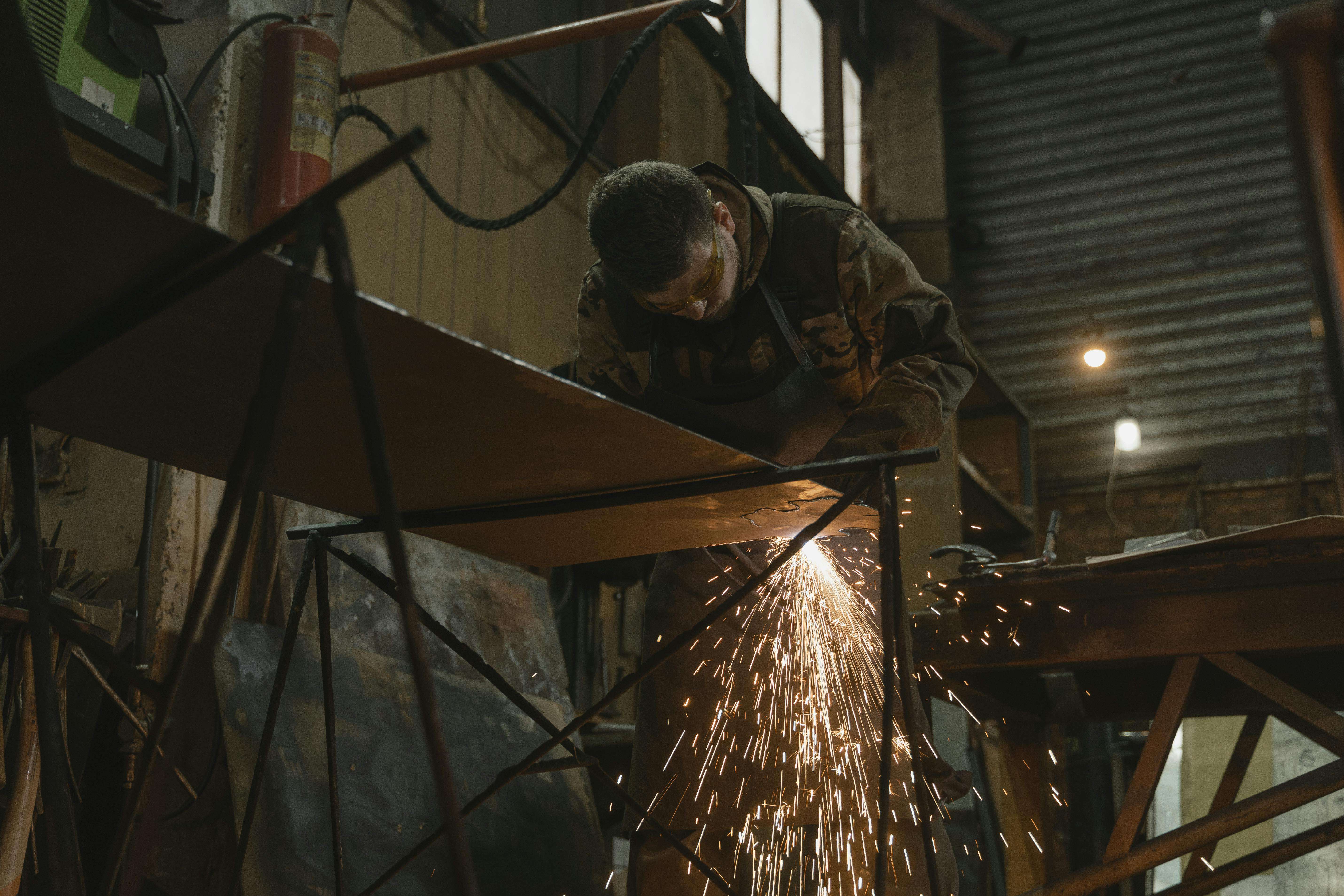
What Is Rope Access Industrial Painting?
Industrial painting from rope access is the application of protective coating systems to steel structures, plant, and equipment at height — without scaffolding. Surface preparation, primer application, intermediate coats, and topcoats are all carried out by technicians working from ropes, using the same materials, equipment, and specifications as any ground-level painting operation.
The reason this matters for asset owners is straightforward: corrosion does not wait for a convenient time to destroy your steelwork, and the cost of scaffolding a large industrial structure for painting can easily exceed the cost of the paint job itself. Rope access removes that scaffolding cost almost entirely, which means protective maintenance gets done on time and within budget rather than being deferred until the corrosion becomes a structural problem.
The operators we list are experienced industrial painting contractors, not domestic decorators who happen to own a harness. They understand coating specifications, surface preparation standards, and the quality assurance requirements that come with industrial coatings work.
Surface Preparation Standards
Surface preparation is the single most important factor in how long a coating system will last. A perfectly applied paint system on a badly prepared surface will fail. A good paint system on a well-prepared surface will last decades.
The key surface preparation standards used in industrial painting are:
Abrasive blast cleaning to SA 2½ (ISO 8501-1) — the most commonly specified standard for new steelwork and maintenance recoating. This produces a near-white metal finish with a consistent anchor profile suitable for high-performance coating systems. Rope access blast teams use portable blast pots with breathing air supply, and all abrasive and debris is contained and collected.
Power tool cleaning to ST 2 or ST 3 (ISO 8501-1) — used where blast cleaning is impractical or unnecessary. ST 2 is thorough cleaning; ST 3 is very thorough cleaning. Needle guns, grinders, and rotary wire brushes remove loose rust, mill scale, and failed coatings. ST 3 is often specified as the minimum for maintenance painting where full blast cleaning would be excessive.
Waterjetting (high pressure and ultra-high pressure) — UHP waterjetting to WJ-1 or WJ-2 standard is increasingly specified, particularly where environmental constraints make dry abrasive blasting difficult. Rope access teams can operate UHP equipment at height, though containment and water management add complexity.
Localised spot repair — feathering back existing coatings around defects, preparing the exposed steel to the required standard, and building the coating system back up to match the surrounding area. This targeted approach is where rope access particularly excels, because technicians can reach individual defects without scaffolding the entire structure.
Coating Systems
Industrial coating systems are designed as multi-layer systems, each layer serving a specific function:
Zinc-rich primer — provides galvanic (sacrificial) protection to the steel substrate. Zinc primers are the foundation of most heavy-duty industrial coating systems. Typical dry film thickness (DFT) is 75 to 100 microns.
Epoxy intermediate coat — provides the bulk of the barrier protection, keeping moisture and chemicals away from the primer and substrate. Epoxy coatings are tough, chemical-resistant, and bond well to zinc primers. DFT is typically 125 to 200 microns per coat.
Polyurethane topcoat — provides UV resistance, colour stability, and the final aesthetic finish. Aliphatic polyurethanes hold their colour and gloss far longer than epoxies, which chalk and discolour in sunlight. DFT is typically 50 to 75 microns.
This three-coat system — zinc, epoxy, polyurethane — is the standard for structural steelwork exposed to atmospheric corrosion. The total system DFT is usually in the range of 250 to 400 microns depending on the specification and the corrosivity category.
Other specialist coatings used in industrial rope access painting include:
- High-temperature coatings — silicone aluminium and inorganic zinc silicate systems for stacks, flues, and hot pipework
- Intumescent fire protection coatings — applied to structural steel to provide fire resistance ratings
- Chemical-resistant linings — vinyl ester, novolac epoxy, and rubber linings for chemical containment areas
- Anti-fouling coatings — for cooling water intake structures and marine steelwork
- Non-slip deck coatings — for walkways, platforms, and grating
Specification Compliance
Industrial coating work is carried out to coating specifications that define every detail: surface preparation standard, coating products, application method, DFT ranges, overcoat intervals, and environmental limits. The two main international frameworks are:
ISO 12944 — the European standard for corrosion protection of steel structures by protective paint systems. It classifies environments from C1 (very low) to CX (extreme) and specifies paint system durability from low (2–5 years) to very high (over 25 years). Most UK industrial sites fall into C3, C4, or C5 categories.
NACE / SSPC — the North American coating standards, still widely referenced in oil and gas and petrochemical sectors. SSPC surface preparation standards (SP 1 through SP 16) and NACE equivalents are often specified alongside or instead of ISO standards.
Compliance with the specification is non-negotiable. Every reputable industrial painting contractor will maintain records of surface preparation achieved, DFT readings at each coat stage, environmental conditions during application, and inter-coat intervals. This quality documentation is part of the deliverable, not an optional extra.
Quality Assurance and Monitoring
Quality assurance on industrial painting is an ongoing process, not a final check. Key QA activities during a rope access painting project include:
DFT measurement — dry film thickness is measured at every coat stage using calibrated gauges. Readings are recorded and must fall within the specified range. Too thin and the system underperforms; too thick and you risk solvent entrapment, mud cracking, or adhesion failure.
Environmental monitoring — steel surface temperature, air temperature, relative humidity, and dew point are recorded before and during application. Most coating specifications prohibit application when the steel temperature is less than 3°C above the dew point, or when relative humidity exceeds 85%. These limits exist because moisture contamination during application causes adhesion failure.
Surface profile measurement — after blast cleaning, the anchor profile is measured using replica tape or a digital profilometer. The profile depth must match the coating manufacturer’s requirements — typically 50 to 100 microns for most high-build systems.
Adhesion testing — pull-off adhesion tests (to ISO 4624 / ASTM D4541) are carried out either as routine QA or when specified. Dolly tests confirm that the bond between coating layers and between the coating system and the substrate meets the required minimum.
Inspection hold points — the specification will define mandatory inspection points where work cannot proceed until the previous stage has been approved. Typically these are after surface preparation, after primer, and after the final topcoat.
Independent coating inspectors — qualified to BGAS-CSWIP, NACE CIP, or ICORR — are often appointed to oversee the quality assurance process. Some rope access companies employ their own inspection-qualified personnel; on larger projects, the client or their consulting engineer will appoint a third-party inspector.
What Assets Benefit Most?
Rope access industrial painting is effective on virtually any steel structure at height, but the cost advantage over scaffolding is most pronounced on:
Pipe bridges and pipe racks — long, linear structures where scaffolding costs escalate quickly due to the length involved. Rope access teams move along the structure progressively, completing each section before moving on.
Columns and vessels — tall vertical structures where full-height scaffold is expensive. Rope access painters work from the top down, completing surface preparation and coating application in a continuous descent.
Structural steelwork on process plants — complex steel frames with multiple levels, cross-bracing, and congested services. Scaffolding in these areas is slow to erect and often conflicts with adjacent operations. Rope access avoids these problems entirely.
Bridges and infrastructure — both road bridges and industrial crossings. Rope access avoids lane closures and works beneath the deck without disrupting traffic.
Tanks and silos — external shell painting on storage tanks and silos. Full circumference scaffolding on a large tank is a major undertaking; rope access reduces the access cost dramatically.
Chimneys and stacks — painting and coating of tall stacks where the only alternative to rope access is a crane-mounted platform, which brings its own cost and weather sensitivity.
Planned Maintenance Painting Programmes
The most cost-effective approach to industrial corrosion management is a planned maintenance painting programme — a rolling schedule of condition assessment, targeted repair, and systematic recoating that keeps coating systems functional and prevents corrosion from reaching the point where structural repairs are needed.
Rope access supports this approach particularly well because the cost of mobilising a rope access painting team for targeted repair work is low compared to scaffolding. This makes it economically viable to carry out small-scope touch-up and repair work on a regular basis, rather than waiting until an entire structure needs recoating.
A typical programme involves:
- Condition survey — rope access coating inspectors assess the existing coating system across the facility, recording coating breakdown, corrosion severity, and DFT. Each area is classified by condition and prioritised for action.
- Repair specification — the consulting engineer or coating inspector produces a repair specification for each priority area, detailing the surface preparation standard, coating system, and DFT requirements.
- Targeted repair — rope access painting teams carry out the repair work in priority order, working within the annual maintenance budget.
- Re-survey — the condition survey is repeated on a rolling cycle (typically every 2 to 5 years depending on the environment) to update priorities and plan the next phase of work.
This approach extends the life of existing coating systems, avoids the cost of premature full recoating, and prevents the kind of deferred maintenance that leads to expensive structural repairs down the line.
Containment and Environmental Controls
Industrial painting generates waste — spent abrasive, paint overspray, and volatile organic compounds (VOCs). Responsible containment is a legal requirement and a practical necessity.
For blast cleaning, full containment using shrink-wrap encapsulation or sheeting is standard practice. Spent abrasive and debris are collected, tested for contamination, and disposed of appropriately. On some sites, vacuum recovery blast systems are used to collect spent abrasive at the nozzle, reducing the volume of waste and the containment requirements.
For spray application, overspray containment prevents paint from reaching adjacent structures, vehicles, or the public. On exposed sites, spray application may be restricted to calm conditions, or brush and roller application may be substituted for areas where overspray control is critical.
VOC emissions are regulated under the Environmental Permitting Regulations. Some coating products — particularly high-solid or water-based formulations — are specifically chosen to reduce VOC emissions where environmental constraints apply.
All waste from industrial painting operations must be classified and disposed of as controlled waste. Waste transfer notes and hazardous waste consignment notes are part of the standard documentation package.
Typical Costs
Industrial painting costs vary significantly depending on the scope, specification, access complexity, and location. As a rough guide:
- Rope access painting team day rate: £1,200 to £1,800 per day for a three-person team (two painters, one supervisor), depending on the specification and location
- Surface preparation: blast cleaning adds 30–50% to the overall cost compared to power tool preparation
- Coating materials: industrial paint systems typically cost £15 to £40 per litre, and coverage rates vary by product and DFT
- Mobilisation: typically a flat charge of £500 to £1,500 depending on distance and equipment requirements
The key comparison is always against scaffold-based alternatives. On a typical industrial structure, scaffolding access for a painting project can cost as much as the painting work itself — sometimes more. Rope access typically saves 40–60% on the total project cost by eliminating that scaffolding element.
Health and Safety
Industrial painting involves hazardous materials, working at height, and often hot work or work in confined spaces. The safety management system around this work is critical.
Expect any competent rope access industrial painting contractor to provide:
- IRATA safety management system, independently audited annually
- COSHH assessments for all coating products and thinners used on site
- Method statements and risk assessments specific to the scope
- Respiratory protective equipment (RPE) face-fit testing records for all operatives
- Health surveillance records for operatives exposed to isocyanates (a requirement for most polyurethane topcoats)
- Environmental monitoring data where required by the specification or permit
On industrial sites, all work is carried out under the site permit-to-work system. Hot work permits are required for power tool preparation (grinding generates sparks), and confined space permits are needed for painting inside vessels or enclosed structures.
Get a Quote
Our directory connects operations managers and maintenance planners with vetted, IRATA-certified rope access industrial painting contractors. The companies listed have experience with multi-coat industrial coating systems, understand specification compliance, and deliver the quality documentation your project requires. Request a quote and we will match you with contractors who have the right capabilities for your scope.