What Is Offshore Rope Access?
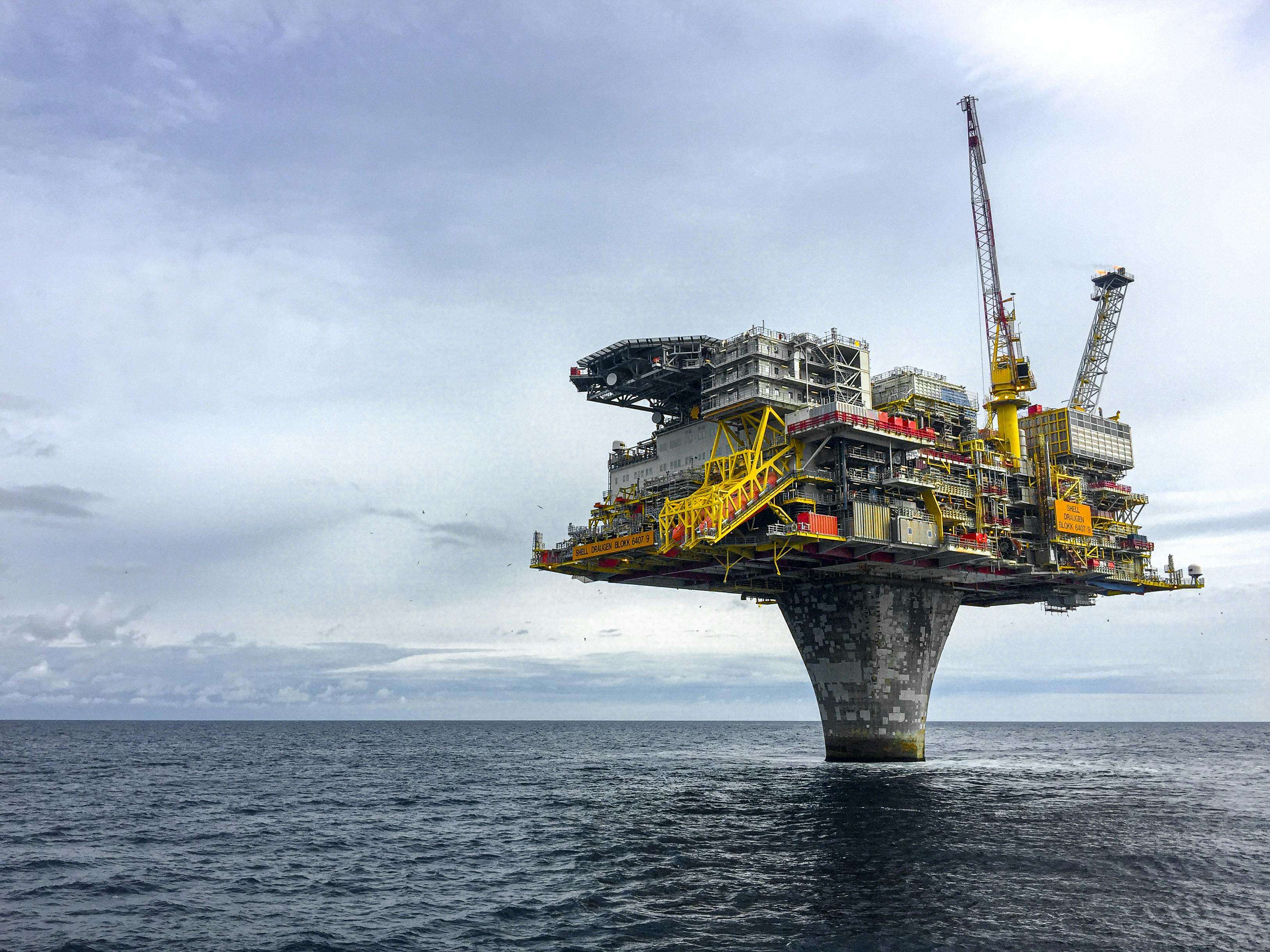
Offshore rope access is the use of industrial rope access techniques to carry out inspection, maintenance, painting, and repair work on oil and gas installations — fixed platforms, FPSOs, jack-up rigs, semi-submersibles, and associated structures. It is not a niche service. Rope access is the dominant access method for maintenance on offshore installations across the North Sea, and has been for over 30 years.
The reason is practical. Offshore platforms are congested, space-constrained environments where scaffolding creates serious problems: it takes up deck space, adds weight to the structure, requires storage for materials, increases personnel on board (POB), and takes a long time to erect and dismantle. Rope access eliminates most of these issues. A team of three or four technicians with a couple of bags of rope and hardware can access the same locations that would require days of scaffolding work, and they leave nothing behind when they are finished.
For duty holders, operations managers, and maintenance planners, rope access offshore is about getting more work done within tighter constraints — tighter POB limits, tighter weather windows, tighter budgets, and tighter shutdown durations.
Why Rope Access Dominates Offshore Maintenance
The offshore environment creates a specific set of constraints that rope access is uniquely well-placed to address:
POB limits — every offshore installation has a maximum personnel on board limit, driven by lifeboat capacity and emergency evacuation capability. A scaffold team might need 8 to 12 people to provide access for a job that 3 or 4 rope access technicians can do themselves. The POB saving is significant, especially during shutdowns when bed space is at a premium.
Deck space and weight — scaffold materials need to be stored somewhere, and on an offshore platform there is nowhere spare. Scaffold boards, tubes, and fittings take up valuable deck space and add dead weight to the structure. Rope access equipment fits in a few bags and weighs almost nothing by comparison.
Mobilisation speed — rope access teams can be rigged and working within hours of arriving on the installation. Scaffolding for the same scope might take days to erect, and that is days of maintenance time lost.
Flexibility — if the scope changes mid-job (which it always does offshore), rope access teams can adapt immediately. Additional inspection points, extra painting areas, or newly discovered defects can be addressed without waiting for scaffold modifications.
Safety record — IRATA rope access has a significantly lower accident rate per hours worked than any other form of industrial access, including scaffolding. The lost time injury frequency rate (LTIFR) for IRATA rope access is consistently below 0.5 per million hours worked — a figure that scaffolding cannot match. When you are working 100 miles offshore with limited medical facilities, that safety differential matters.
Platform Types and Working Environments
Offshore rope access teams work across the full range of installation types:
Fixed steel platforms — the most common work environment in the North Sea. Jacket legs, conductor guides, risers, module support frames, process decks, drilling derricks, and flare towers all require regular maintenance. Rope access technicians work on the external faces of the jacket structure (sometimes from sea level upwards), on internal congested areas within modules, and at height on derricks and flare booms.
FPSOs (Floating Production, Storage and Offloading vessels) — converted tankers or purpose-built vessels that process and store hydrocarbons. Turret structures, process modules, hull plating, and mooring systems all need maintenance. The added complexity with FPSOs is vessel motion — technicians need to manage dynamic movement while working on ropes. Experienced offshore rope access teams are familiar with this and plan their work accordingly.
Jack-up rigs — drilling rigs with legs that jack up above the sea surface. Leg inspections, cantilever crane structures, and derrick maintenance are common rope access scopes on jack-ups. The work is typically carried out during rig moves or between drilling campaigns.
Semi-submersibles — floating rigs with pontoons and columns below the waterline. Column inspections, pontoon work (in dry dock or afloat), and topside maintenance are all carried out by rope access.
Subsea structures — manifolds, Christmas trees, and pipeline end terminations sometimes require diver-assisted rope access techniques, though this is a specialist area that overlaps with commercial diving rather than conventional offshore rope access.
Typical Scopes of Work
The range of work carried out by offshore rope access teams is broad. Most technicians are multi-skilled — they are not just access specialists, they are trained and qualified tradespeople who carry out the actual work at the access point. Common scopes include:
Fabric maintenance — the bread and butter of offshore rope access. Painting and coating repair, structural steel preservation, minor steelwork repairs, grating replacement, handrail repair, drain clearing, and general housekeeping tasks. Fabric maintenance campaigns are planned annually and executed over a series of crew rotations.
NDT inspection — dual-qualified IRATA/NDT technicians carry out ultrasonic thickness measurement, MPI, DPI, ACFM, and visual inspection on structural nodes, jacket members, pipework, vessels, and process equipment. Inspection is often the first phase of a maintenance campaign, with the results determining what repair work follows.
Painting and blast cleaning — surface preparation and coating application on structural steel, process equipment, and safety-critical areas. Blast cleaning on offshore structures requires careful containment to prevent contamination of the marine environment. Specifications are typically to NORSOK M-501 or operator-specific standards.
Mechanical support — valve maintenance, flange management, gasket replacement, bolt torquing, and small-bore pipework tasks. Rope access mechanical technicians often hold additional qualifications in flange integrity (ECITB JIP) or mechanical joint integrity.
Insulation and cladding — removal and replacement of thermal insulation and weather cladding on pipework and vessels. This is frequently carried out to enable CUI (corrosion under insulation) inspections, with the rope access team stripping the insulation, carrying out the NDT, and then reinstating the cladding.
Fireproofing — inspection and repair of passive fire protection (PFP) systems on structural steel and vessels. Damaged or degraded fireproofing needs to be identified, removed, and replaced — all of which is routinely done from ropes.
Certification and Competency Requirements
Offshore rope access has the most demanding certification requirements of any rope access discipline. A typical offshore rope access technician will hold:
IRATA certification — Level 1, 2, or 3. The three-year certification is maintained through regular re-assessment. IRATA Level 3 technicians supervise work sites and hold ultimate responsibility for rope access safety on the job.
Offshore survival training — BOSIET (Basic Offshore Safety Induction and Emergency Training) for first-time offshore workers, or FOET (Further Offshore Emergency Training) for those renewing. These four-year certificates cover helicopter underwater escape, sea survival, firefighting, and first aid.
OGUK medical — a fitness-to-work medical examination that confirms the individual is fit for offshore duty. Valid for two years and carried out by an approved physician.
Trade qualifications — depending on the scope of work: PCN/CSWIP NDT certificates, ICATS/NACE painting inspector qualifications, coded welder certification (BS EN 9606 / ASME IX), ECITB mechanical joint integrity, City & Guilds confined space, or any number of other trade certifications.
Client-specific requirements — many operators require additional competency assessments, site-specific inductions, or operator-approved training. Shell, BP, TotalEnergies, Equinor, and others each have their own requirements on top of the industry baseline.
The cost and time investment to get a technician fully certified for offshore work is significant, and this is reflected in the day rates. But it means the people turning up on your installation are properly qualified and have earned their place there.
Safety Record
The IRATA safety record offshore is exceptional. IRATA publishes an annual work and safety analysis covering all member companies worldwide. The data consistently shows:
- Zero fatalities from rope access operations in the UK and North Sea sector over the reporting period
- LTIFR well below 1.0 per million hours worked — typically in the range of 0.2 to 0.5
- Incident rates that are a fraction of those recorded for scaffolding operations
This is not accidental. The IRATA system is built around rigorous training, regular reassessment, mandatory work-site supervision, and an equipment inspection regime that catches problems before they become incidents. Every IRATA member company is audited annually against the IRATA code of practice, and the consequences of non-compliance are severe — suspension or removal from the membership scheme.
For duty holders, this safety record is a significant factor in the decision to use rope access over scaffolding. Under the Offshore Installations (Safety Case) Regulations, duty holders must demonstrate that risks are reduced to as low as reasonably practicable (ALARP). The safety data for rope access versus scaffolding makes a strong ALARP argument in favour of rope access for the vast majority of offshore maintenance tasks.
Day Rates and Campaign Economics
Offshore rope access day rates are higher than onshore rates, reflecting the additional certifications, training, travel, and working conditions involved. Typical UK North Sea rates:
- IRATA Level 1 technician with trade skills: £350 to £450 per day
- IRATA Level 2 technician with trade skills: £400 to £550 per day
- IRATA Level 3 supervisor: £500 to £650 per day
- Dual-qualified NDT/rope access technician: £500 to £700 per day
These are the technician day rates. The employer will also bear the cost of travel, accommodation (offshore bed-night charges are levied by the installation operator), PPE, equipment, and mobilisation. The total cost to the client for a rope access team offshore will be higher than the sum of the individual day rates.
However, the cost comparison that matters is not rope access day rates versus scaffold day rates. It is the total cost of completing the work scope — including access provision, trade labour, materials, POB impact, and programme duration. On that basis, rope access is consistently cheaper for the types of scopes it is suited to, which is the majority of offshore maintenance and inspection work.
For multi-year fabric maintenance contracts, the economics improve further. A dedicated rope access team embedded in the maintenance crew rotation delivers better continuity, better knowledge of the installation, and lower mobilisation costs compared to ad-hoc call-off arrangements.
Campaign Planning and Crew Rotations
Offshore work is planned around crew rotations — typically 2 weeks on / 2 weeks off (2/2), 2 weeks on / 3 weeks off (2/3), or 3 weeks on / 3 weeks off (3/3). The rotation pattern is dictated by the installation operator and is usually consistent with the rest of the maintenance crew.
Effective campaign planning means matching the work scope to the available crew rotations and weather windows. North Sea weather limits productive working time, particularly in winter — bad weather days when external work cannot proceed are a fact of life, and they need to be factored into the programme.
A well-planned offshore rope access campaign will:
- Break the total scope into rotation-sized packages that can be completed within a single trip
- Prioritise safety-critical and production-critical items for the first rotations
- Allow contingency for weather downtime and scope changes
- Plan material deliveries to align with crew change logistics
- Ensure back-to-back crew availability so there is no gap between rotations
For shutdown and turnaround work — where the clock is ticking against lost production — the planning is more intensive. Inspection and repair scopes are sequenced to support the critical path, and additional crews may be mobilised to compress the programme.
North Sea and International Operations
The UK continental shelf (UKCS) is the home ground for offshore rope access, and the North Sea is where the discipline was developed and refined. Most of the major offshore rope access contractors in our directory have their roots in Aberdeen, the operational hub for UK North Sea operations.
However, offshore rope access is a global discipline. UK-based companies operate internationally — West Africa, the Middle East, Southeast Asia, and the Americas. The IRATA certification system is recognised worldwide, and UK-trained technicians are in demand on international projects because of the high standard of training and the safety culture they bring.
For operators with international portfolios, the ability to source a consistent standard of rope access service across multiple regions from a single contractor — or through a network of IRATA-certified companies — is a practical advantage.
Working With Duty Holders and OIMs
Offshore rope access work is carried out within the installation’s safety management system, under the authority of the OIM (Offshore Installation Manager). The rope access contractor does not operate independently — they integrate into the existing permit-to-work system, toolbox talk regime, and emergency response plan.
Expect the contractor to provide:
- A project-specific method statement and risk assessment, reviewed and accepted by the installation operator before mobilisation
- An IRATA operational plan detailing all rope access work locations, anchor points, rescue plans, and exclusion zones
- Daily activity reports and tool box talk records
- Integration with the installation’s isolation, lock-out/tag-out, and confined space entry procedures
- Participation in the installation’s emergency drills and mustering procedures
The relationship between the rope access contractor and the duty holder is a collaborative one. The best offshore rope access contractors understand that they are guests on someone else’s installation and conduct themselves accordingly.
Get a Quote
Our directory connects offshore operations managers and maintenance planners with established, IRATA-certified offshore rope access contractors. The companies listed have current offshore experience, fully certified crews, and the trade skills to deliver your maintenance and inspection scope. Request a quote with details of your installation, scope, and programme, and we will match you with contractors who have the right capability.