Where Rope Access Is Used in Coventry
Coventry’s built environment is unlike any other UK city of its size. The post-war reconstruction created one of the most significant collections of modernist architecture in Britain, while the automotive manufacturing heritage left a large stock of industrial buildings. The UK City of Culture 2021 investment added new cultural infrastructure, and ongoing regeneration is reshaping the city centre.
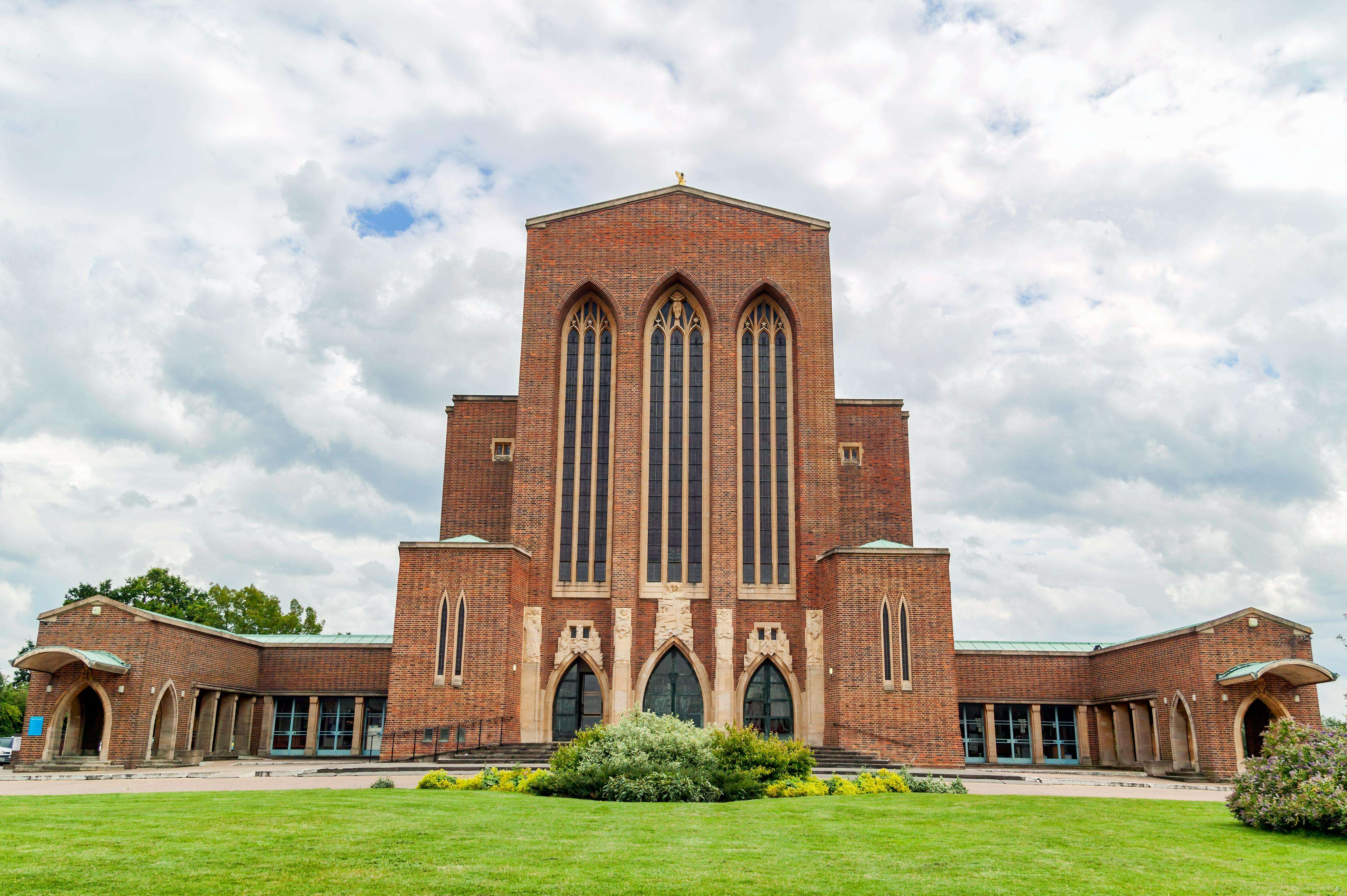
Post-war modernist architecture. Coventry was rebuilt after devastating wartime bombing, producing buildings that are now recognised as nationally important modernist architecture. Several are listed — the Belgrade Theatre, the Herbert Art Gallery extension, the Lanchester Library at Coventry University, and various civic buildings along Corporation Street and the precinct. These concrete, glass and mosaic structures present specific maintenance challenges: exposed aggregate panels, precast concrete cladding and curtain wall systems all require specialist repair techniques that rope access delivers without the need to wrap entire buildings in scaffold.
Coventry Cathedral. The ruins of the old cathedral and Basil Spence’s new cathedral (Grade I listed) together form one of the most visited heritage sites in the Midlands. The new cathedral’s distinctive sawtooth walls, the Sutherland tapestry end wall and the Piper baptistry window all require careful external maintenance. The old cathedral ruins need ongoing stonework conservation. Rope access is the standard method for reaching the high-level elements of both structures.
Friargate business district. The Friargate development adjacent to the railway station is Coventry’s largest commercial scheme, bringing new office buildings, a hotel and public realm to the city centre. These modern facades require cyclical cleaning, glazing maintenance and sealant renewal — generating long-term rope access demand.
University campuses. Coventry University’s city centre campus has expanded significantly, with new faculty buildings, the Engineering and Computing building and student accommodation blocks. The University of Warwick, three miles south, has a massive campus estate including the Warwick Arts Centre, the Oculus and numerous science and engineering buildings. Both institutions run continuous maintenance programmes.
Automotive and manufacturing facilities. Jaguar Land Rover’s operations at Whitley and the surrounding automotive supply chain, along with manufacturing facilities across the wider Coventry and Warwickshire area, require specialist industrial rope access for structural inspection, overhead crane maintenance, steelwork painting and confined-space entry.
City of Culture legacy buildings. The 2021 City of Culture programme invested in venues and public spaces across the city. The Telegraph Hotel conversion, Assembly Festival Garden site and improvements to the Herbert Art Gallery all created buildings and structures requiring ongoing maintenance.
Ring road infrastructure. Coventry’s inner ring road — a raised dual carriageway encircling the city centre — is a major piece of concrete infrastructure requiring regular inspection, concrete repair and drainage maintenance. The underpasses, elevated sections and bridge structures are all rope access work.
Rope Access vs Scaffolding in Coventry
Coventry’s specific building types and city centre layout make rope access the practical choice for most at-height maintenance.
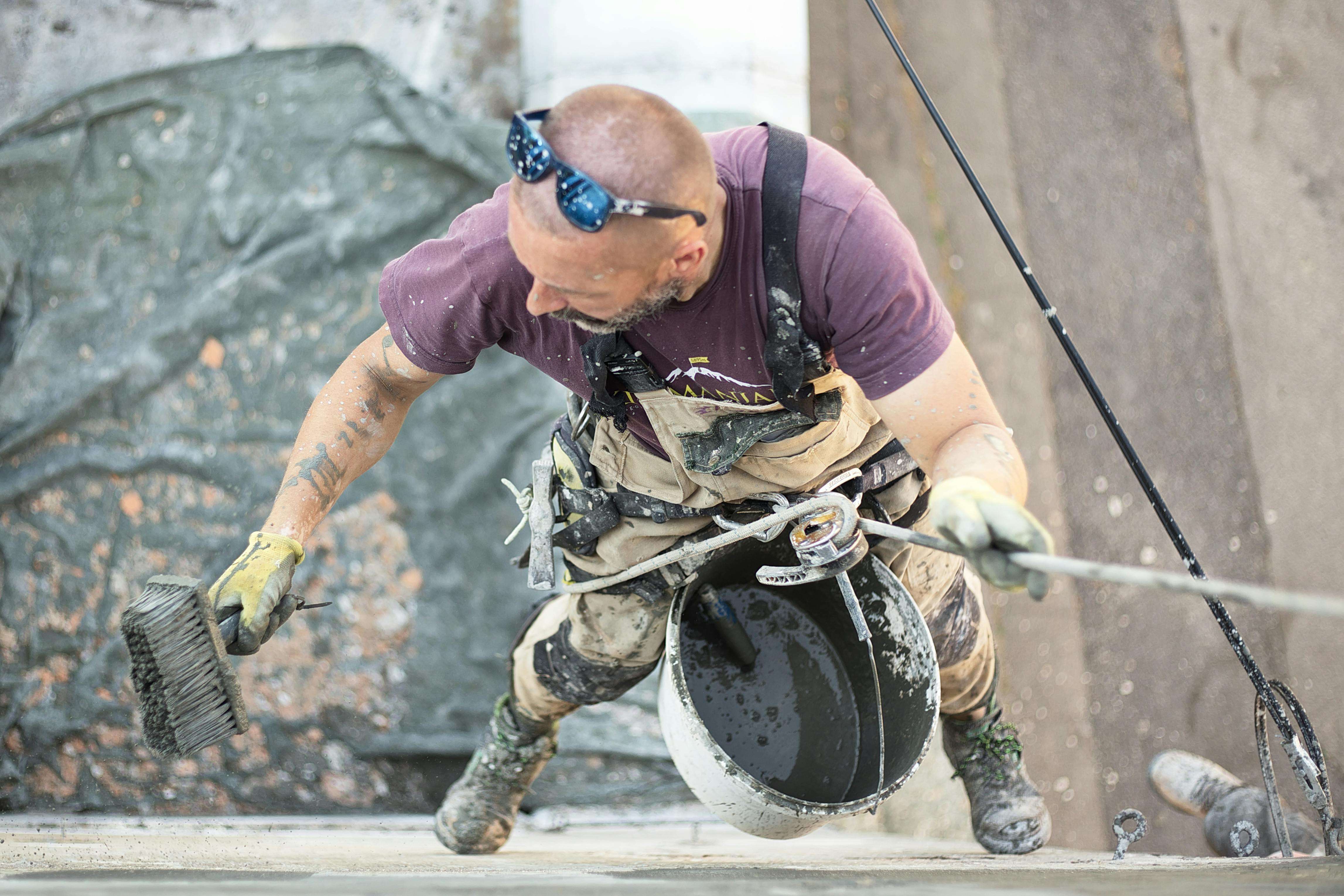
Concrete repair on modernist buildings. Coventry’s 1950s and 1960s concrete buildings are reaching the age where carbonation-induced reinforcement corrosion causes spalling. Concrete repair on these structures is an extensive and growing market. Scaffold hire for multi-month concrete repair programmes on large civic buildings is extremely expensive; rope access allows technicians to work on affected areas progressively without scaffolding entire elevations.
Ring road access constraints. Working on or near the ring road requires traffic management, lane closures and coordination with Highways. Scaffold erection on the ring road structures would cause major disruption to the city’s traffic flow. Rope access teams can deploy from above with minimal or no lane closures required.
Pedestrianised precinct. The city centre precinct — Broadgate, Hertford Street, Smithford Way — is a pedestrianised area where scaffold would obstruct footfall and market stalls. Rope access works from rooftops without any ground-level presence.
Listed modernist buildings. Several of Coventry’s post-war buildings are listed, meaning scaffold attachment to facades may require listed building consent. Given that these buildings often have decorative concrete panels, mosaic cladding or curtain wall systems that could be damaged by scaffold ties, rope access is both the faster and safer option.
Manufacturing site constraints. Automotive production lines cannot stop to accommodate scaffold erection inside factory buildings. Rope access teams can work above active production during planned maintenance shutdowns, maximising the productive use of limited downtime windows.
Event calendar. Since the City of Culture year, Coventry has maintained an active events programme in the city centre. Scaffold on buildings near event venues would conflict with setup and crowd management; rope access can be scheduled around the events calendar.
Common Rope Access Projects in Coventry
- Concrete repair and restoration — spalling concrete repair on post-war modernist buildings, the ring road, multi-storey car parks and civic structures — one of the largest single categories of rope access work in Coventry
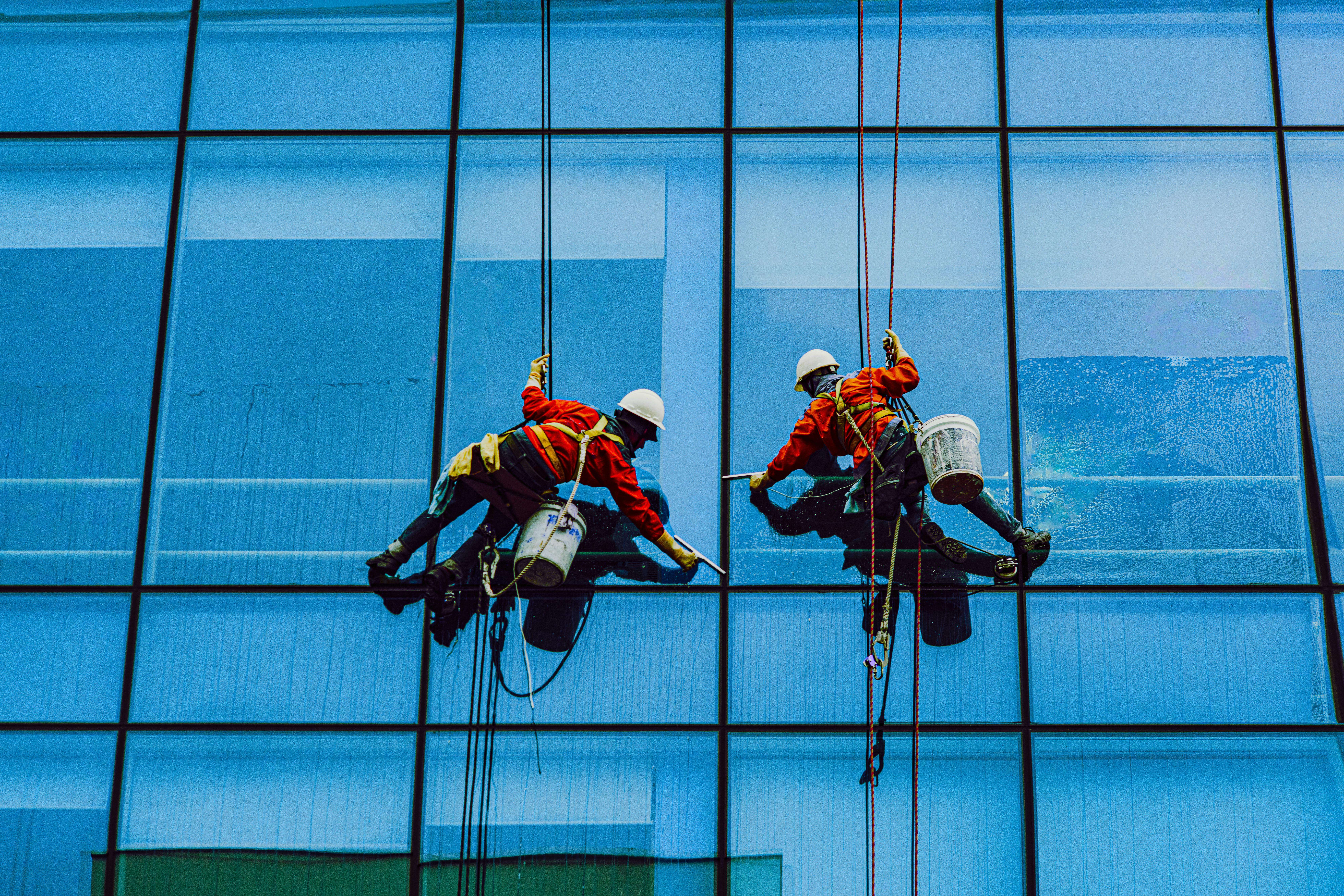
- Facade cleaning and maintenance — curtain wall cleaning on modern office buildings, concrete panel cleaning on civic buildings, brick cleaning on converted industrial properties
- Heritage building maintenance — stonework conservation on the old cathedral ruins, specialist access to the new cathedral’s high-level elements, maintenance of listed modernist buildings
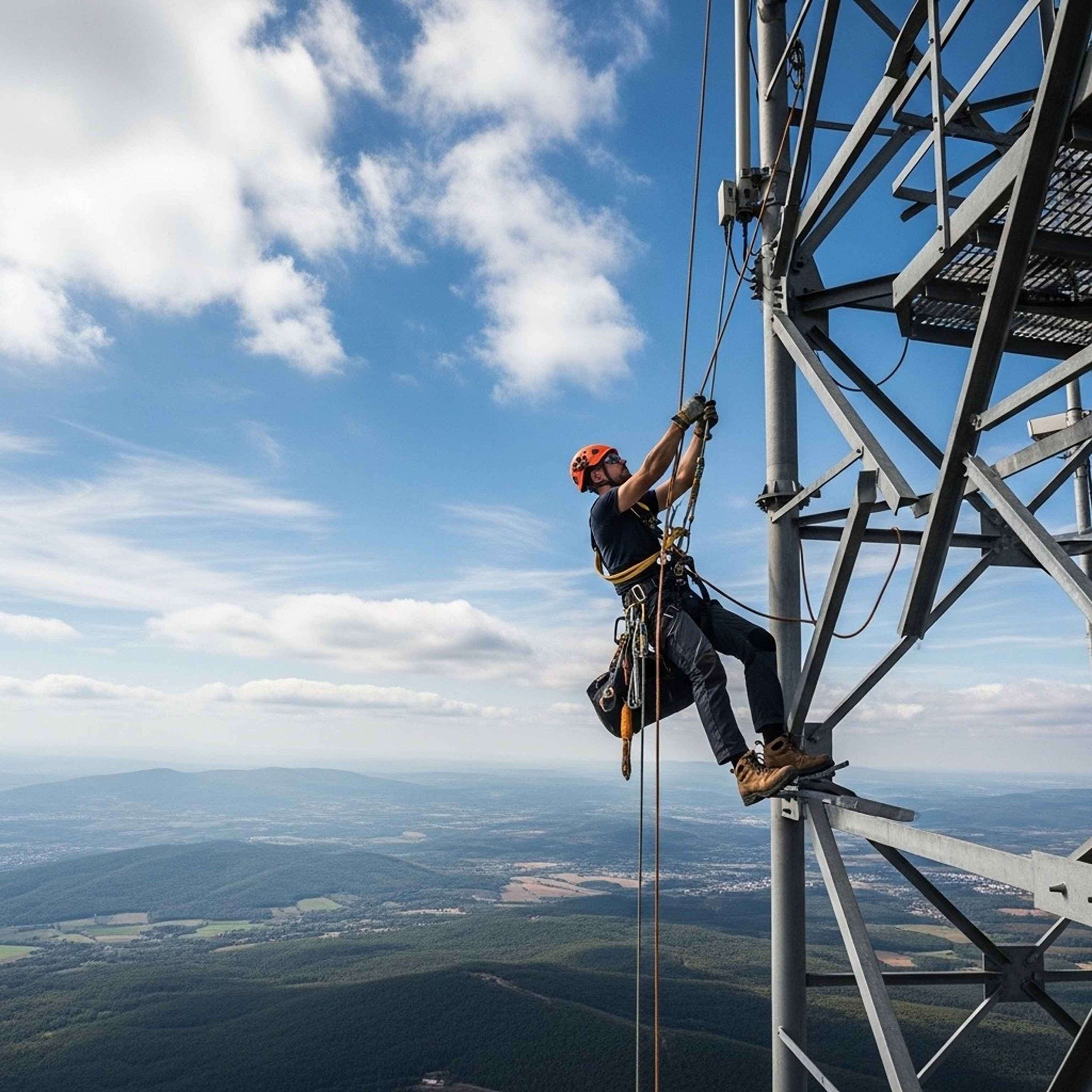
- Industrial inspection and maintenance — structural surveys, steelwork painting, overhead crane access and confined-space entry at manufacturing facilities
- Building surveys and condition reports — close-up inspection for structural engineers on commercial, civic and university buildings
- Glazing replacement — failed units and seal replacement on modern office buildings and university campuses
- Ring road infrastructure maintenance — concrete inspection, drainage repair, expansion joint renewal and protective coatings on the elevated road structures
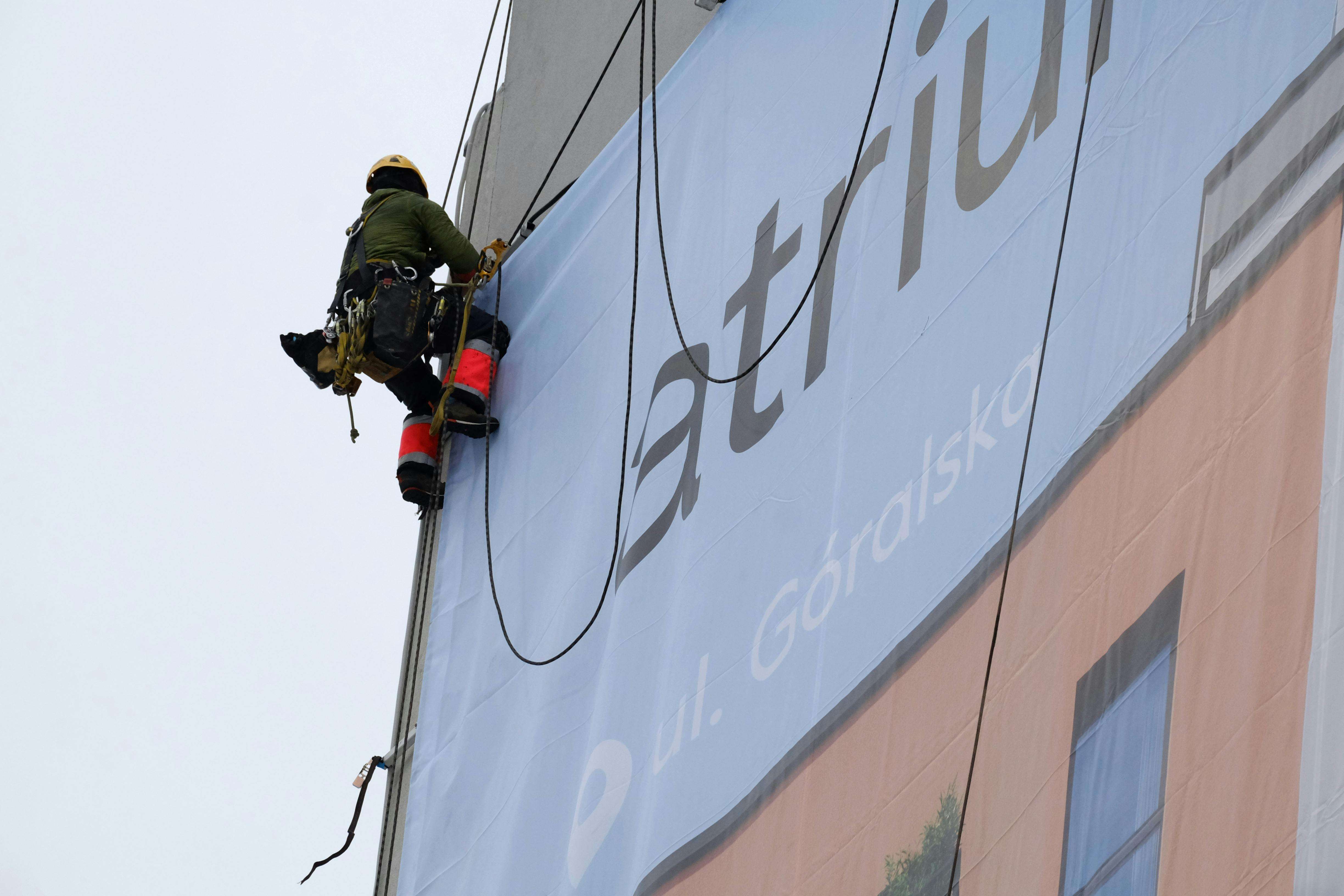
- Signage installation — commercial and wayfinding signage across the city centre and Friargate development
- Waterproofing and sealant renewal — expansion joint repairs and weatherproofing on 1960s concrete buildings and modern commercial developments
Areas We Cover from Coventry
Our operators cover the wider Warwickshire and West Midlands region. Key areas of activity include Birmingham, Warwick, Rugby, Nuneaton, Kenilworth, Leamington Spa, Bedworth, Solihull and the M6/M69 corridor. Coventry’s central location between Birmingham and Leicester makes it an efficient base for reaching sites across the heart of England.