Where Rope Access Is Used in Leeds
Leeds has a broad building stock — from Victorian commercial grandeur to a fast-growing cluster of modern towers — and rope access is used across all of it:
Financial district office towers. Leeds is the largest financial and legal centre outside London, and the office stock reflects it. Bridgewater Place, No.1 Leeds (formerly City One), the Platform buildings and the towers along Wellington Street and Park Row require regular facade cleaning, curtain wall seal replacement, glazing inspections and high-level maintenance. These buildings are on busy city centre streets where scaffold disruption is unwelcome.
South Bank regeneration. The South Bank scheme is one of the largest city centre regeneration programmes in Europe, doubling the size of Leeds city centre south of the river. New residential towers, office buildings and mixed-use developments are in various stages of construction and completion. Rope access is used during construction for installation work and will be essential for long-term facade maintenance as these buildings come into service.
Victorian arcades and heritage buildings. Kirkgate Market, the County Arcade, the Grand Arcade, the Corn Exchange and the Queens Hotel are among Leeds’ finest Victorian and Edwardian buildings. These ornate facades — carved stone, decorative ironwork, glazed canopies and intricate terracotta — require specialist maintenance that is best delivered by rope access to avoid scaffold contact damage and minimise disruption to traders.
Quarry Hill and eastern developments. The Quarry Hill area around the Playhouse, the Quarry House government building and the surrounding new-build residential schemes form a growing cluster of mid- and high-rise buildings. Rope access provides efficient maintenance access across this mixed-age stock.
University campuses. The University of Leeds and Leeds Beckett University maintain substantial estates spanning brutalist concrete teaching blocks, Victorian redbrick and modern glass-clad buildings. Maintenance must be carried out during term time without disrupting lectures, research or student accommodation. Rope access delivers this with minimal footprint.
Infrastructure. The M621 inner ring road, railway viaducts, the Leeds and Liverpool Canal bridges and the River Aire crossings all require periodic inspection, painting and repair. Rope access minimises lane closures and traffic management requirements compared to scaffold-based methods.
Residential towers and cladding. Leeds has a growing stock of residential towers built in the 2000s and 2010s, many now subject to Building Safety Act requirements. EWS1 surveys, cladding remediation and fire-stopping works are an active and expanding market.
Rope Access vs Scaffolding in Leeds
Leeds has specific characteristics that make rope access the practical choice for most at-height work:
Narrow commercial streets. The streets around Briggate, the Headrow, Park Row and the financial quarter have limited pavement width and constant pedestrian traffic. Scaffold erection requires temporary pavement closures, pedestrian diversions and council permits. Rope access teams work from the roof with no ground-level obstruction.
Victorian arcade interiors. Internal maintenance of the County Arcade, Queens Arcade and Thorntons Arcade glazed roofs and upper facades is extremely difficult with scaffold due to the confined spaces and need to keep retail units trading. Rope access allows technicians to reach these areas without closing shops or blocking walkways.
Active retail frontages. Briggate is one of the highest-footfall retail streets in the north of England. Scaffold on these frontages blocks shopfronts, reduces visibility and triggers complaints from tenants and landlords. Building managers prefer rope access for cleaning, repairs and inspections precisely because it keeps the street clear.
South Bank construction logistics. The South Bank area is an active construction zone with complex logistics, multiple contractors and constrained site access. Rope access requires minimal plant and materials compared to scaffold, reducing the coordination burden on main contractors.
Heritage and conservation areas. The city centre and several surrounding areas have conservation area status. Scaffold on listed buildings may require conservation officer approval and risks damage to carved stone, terracotta and decorative metalwork. Rope access avoids these risks and approvals.
Programme speed. Leeds’ commercial property market demands reactive maintenance — a leaking facade joint or displaced coping stone on a Grade A office building cannot wait for scaffold. Rope access teams mobilise within days, not weeks.
Common Rope Access Projects in Leeds
The most frequently requested rope access work across Leeds and West Yorkshire includes:
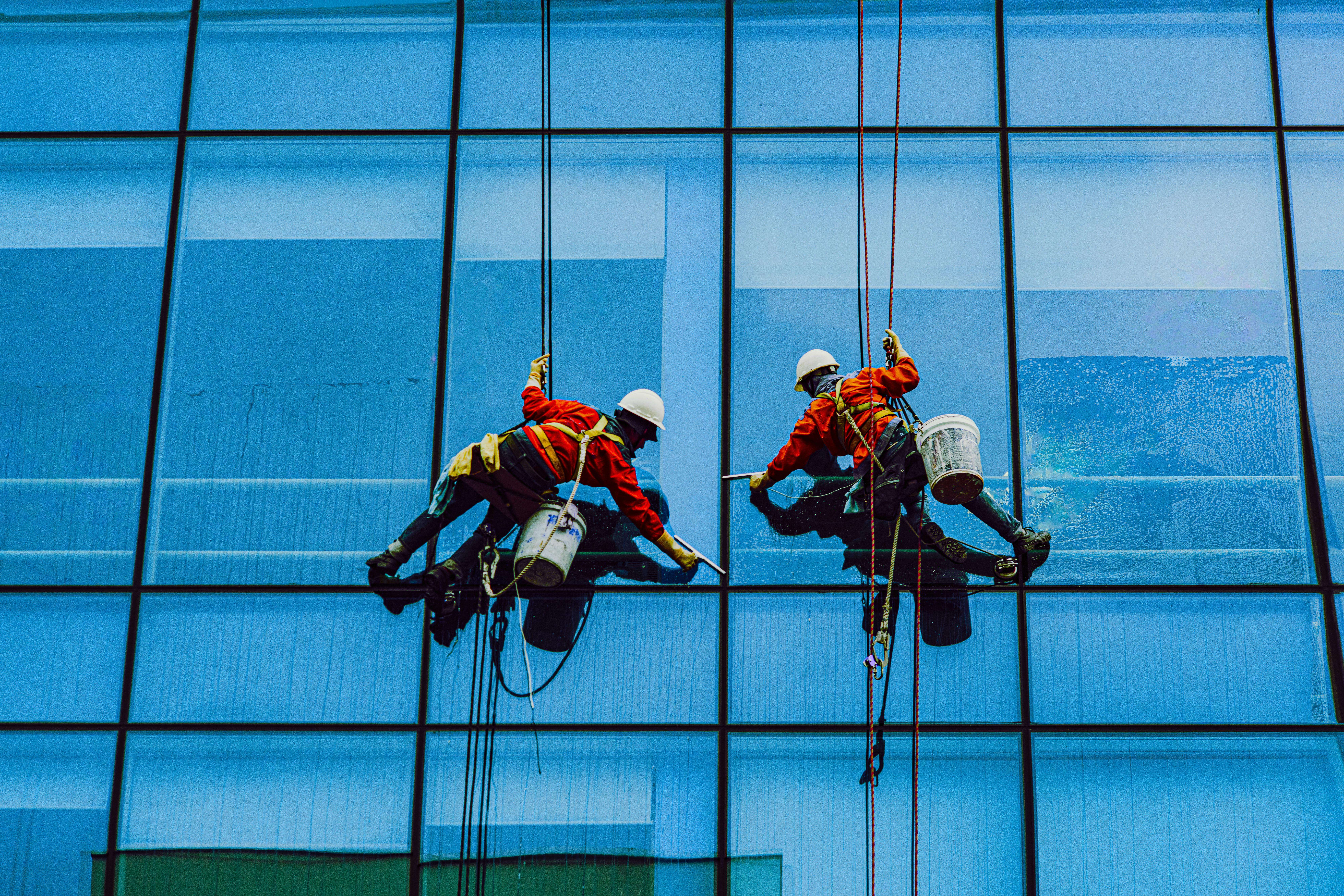
- Facade cleaning — curtain wall washing on financial district offices and stone cleaning on Victorian commercial buildings
- Curtain wall maintenance — gasket replacement, seal renewal and drainage clearance on glass-clad towers
- Cladding inspection and remediation — EWS1 surveys, cladding replacement and fire-stopping on residential buildings
- Heritage stonework restoration — stone repair, repointing, terracotta replacement and decorative ironwork maintenance on Victorian arcades and commercial buildings
- Concrete repair — spalling concrete on post-war housing, university buildings and multi-storey car parks
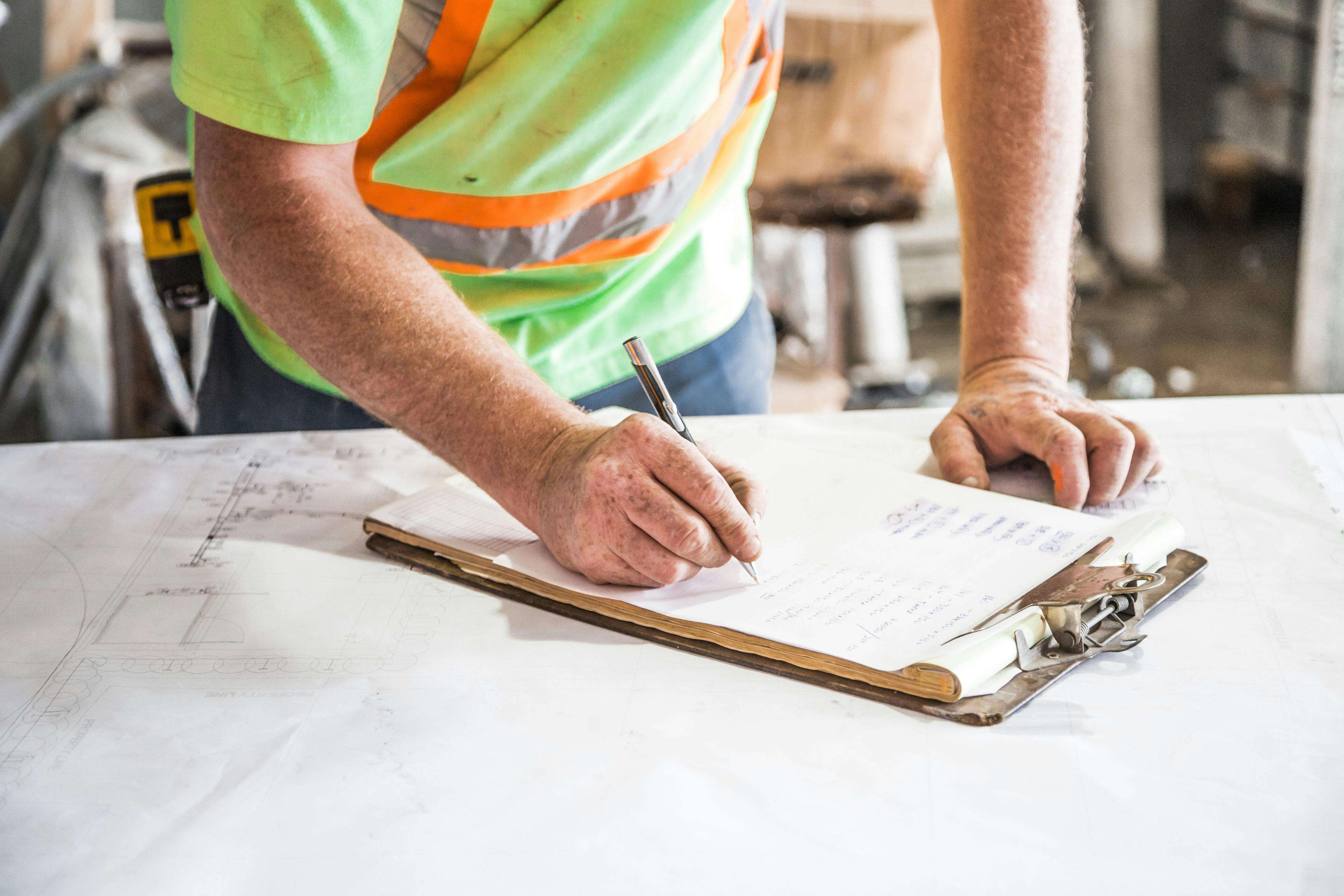
- Building surveys and condition reports — close-up facade inspection for structural engineers, surveyors and building safety managers
- Glazing replacement — failed sealed units, cracked panels and structural glass repairs on office towers
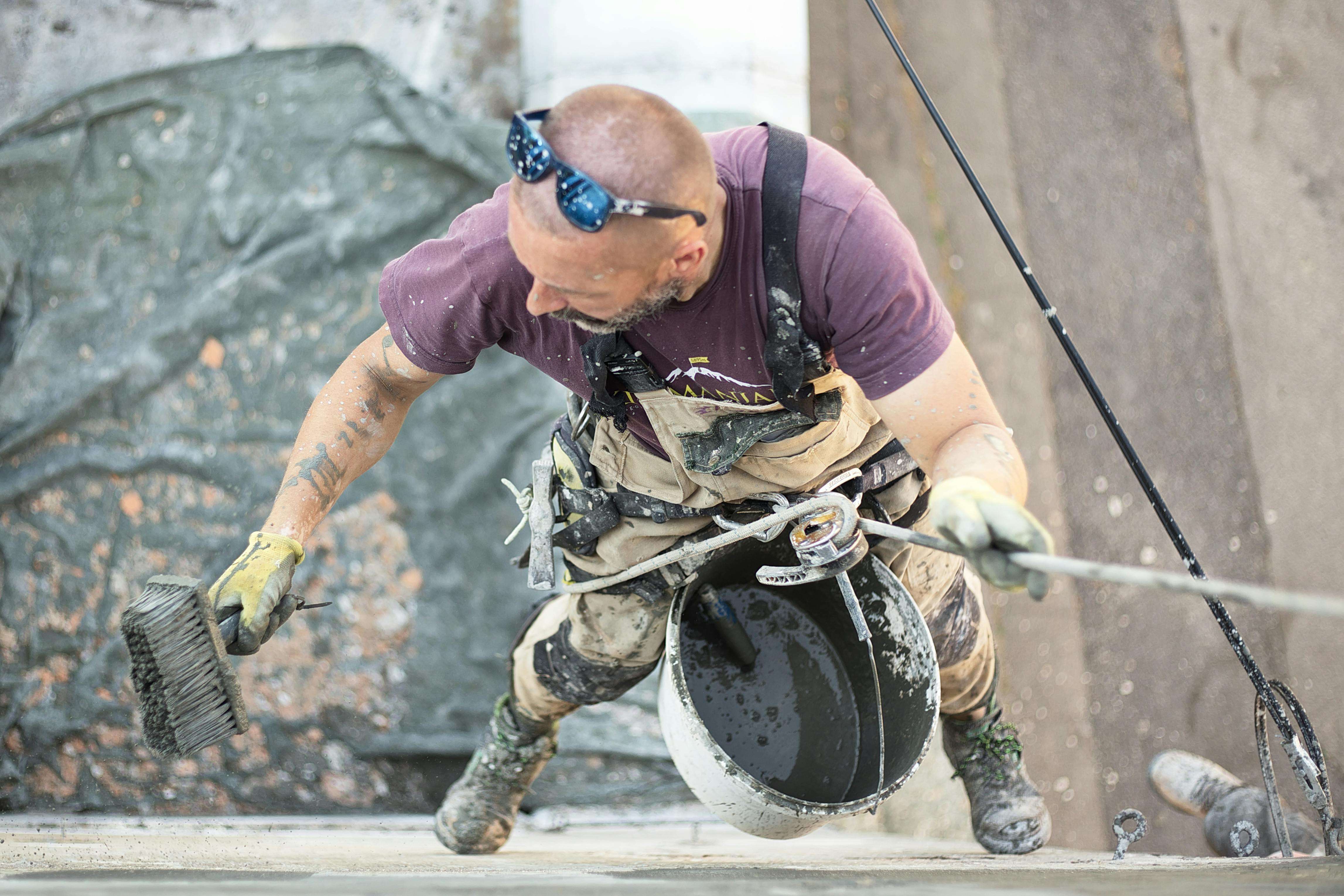
- Industrial painting — protective coatings on bridges, viaducts, structural steelwork and infrastructure along the Aire Valley
- Waterproofing — expansion joint repairs, sealant renewal and weatherproofing on commercial buildings
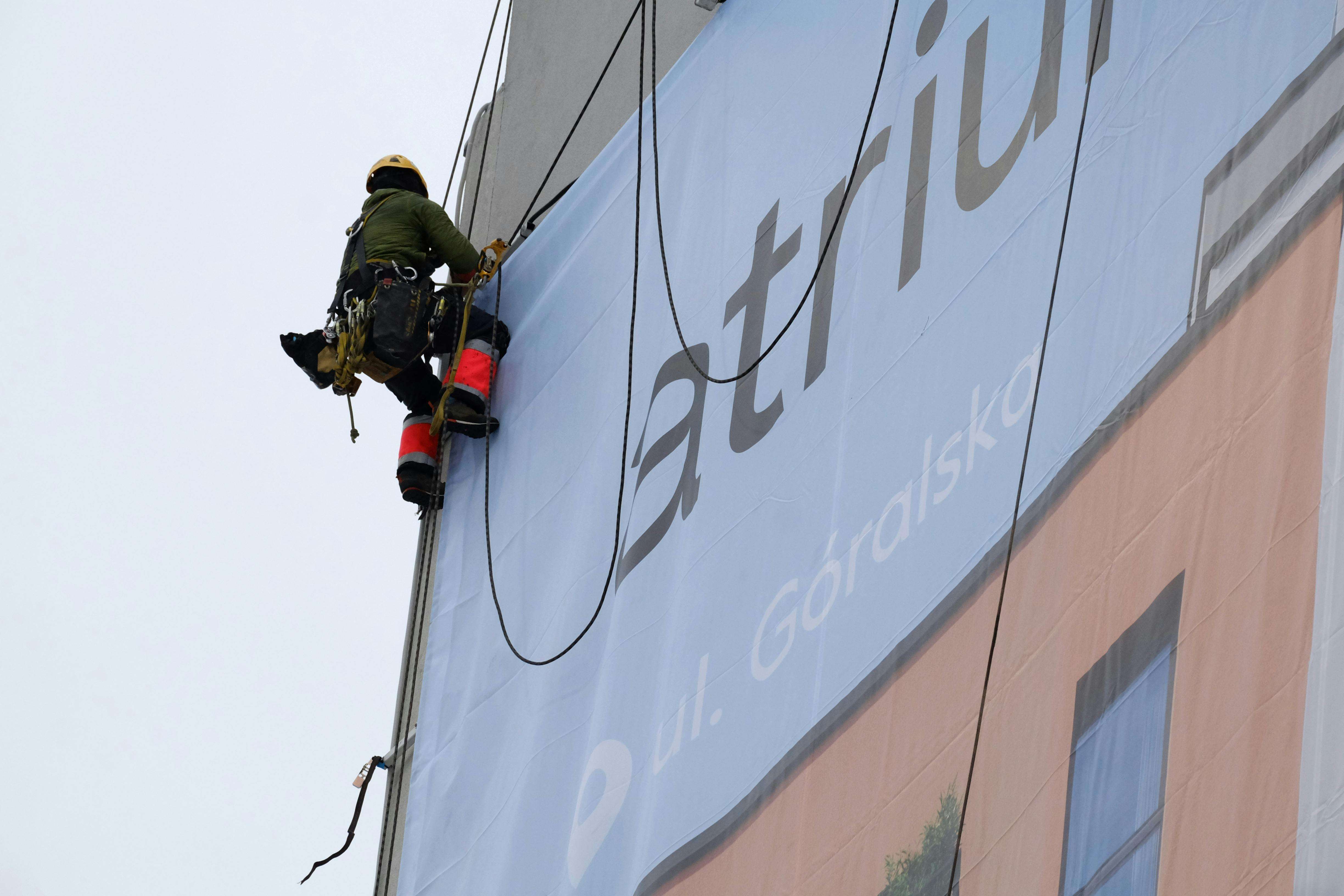
- Signage and branding — installation and maintenance of building signage on commercial towers and retail developments
Areas We Cover from Leeds
Our operators cover Leeds city centre and the wider West Yorkshire region. Key areas of activity include Bradford, Wakefield, Huddersfield, Halifax, Harrogate, York, Dewsbury, Ilkley, Otley and Wetherby. We also serve the broader Yorkshire region including Sheffield, Doncaster, Barnsley and towns along the M62, M1 and A1(M) corridors.