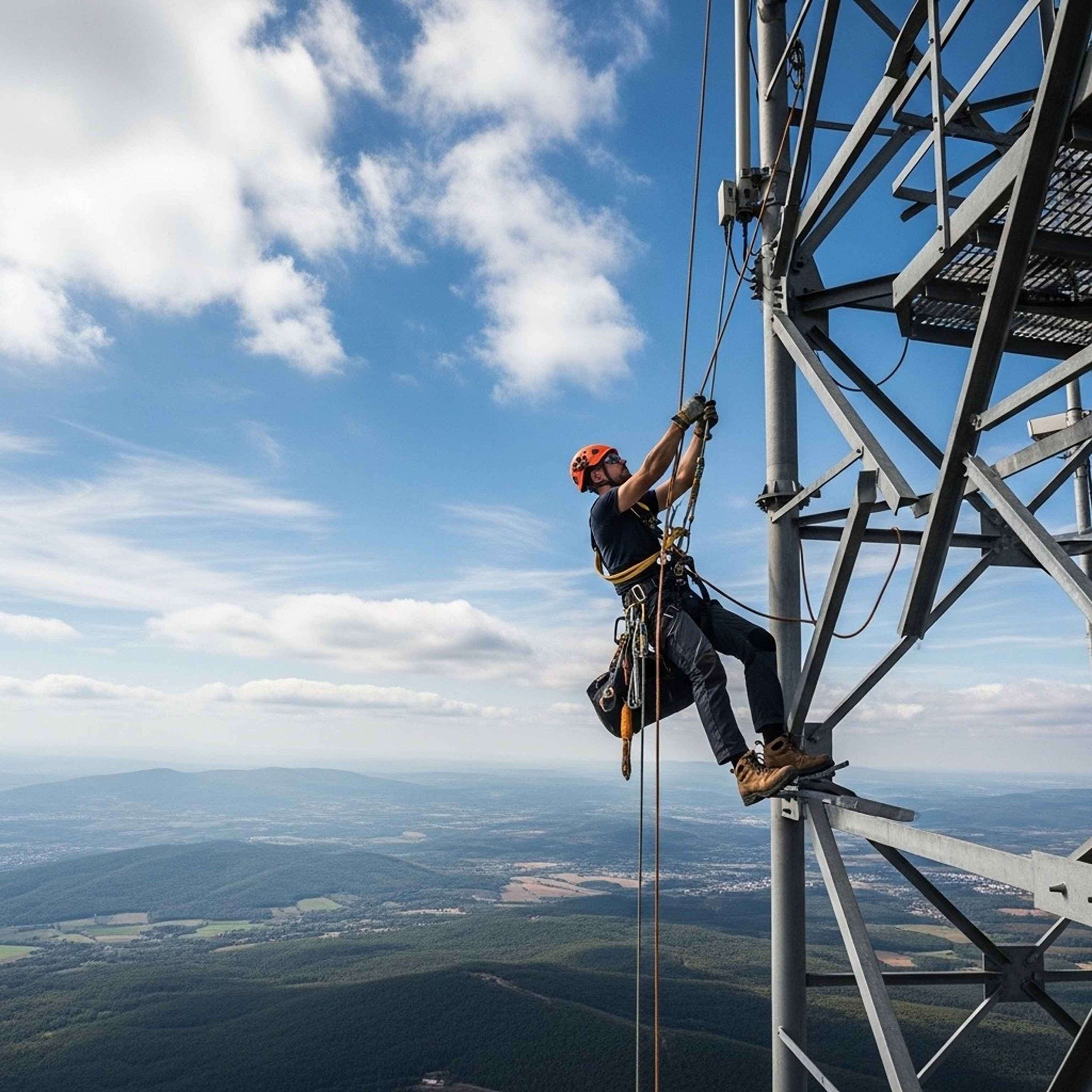
Where Rope Access Is Used in Portsmouth
Portsmouth is uniquely constrained — a dense city built almost entirely on Portsea Island, with the Royal Navy’s principal base occupying a significant portion of the waterfront. This creates access challenges found nowhere else in the UK.
HMNB Portsmouth and naval dockyard. The Royal Navy’s headquarters and operational base contains dry docks, maintenance buildings, covered ship halls, crane infrastructure and historic dockyard structures dating back centuries. Rope access is used extensively for steelwork inspection, protective coating on dockyard cranes, building maintenance and confined-space access within dock structures. Security clearance requirements mean only vetted contractors can operate on-base — a significant barrier to entry that sustains demand for specialist teams.
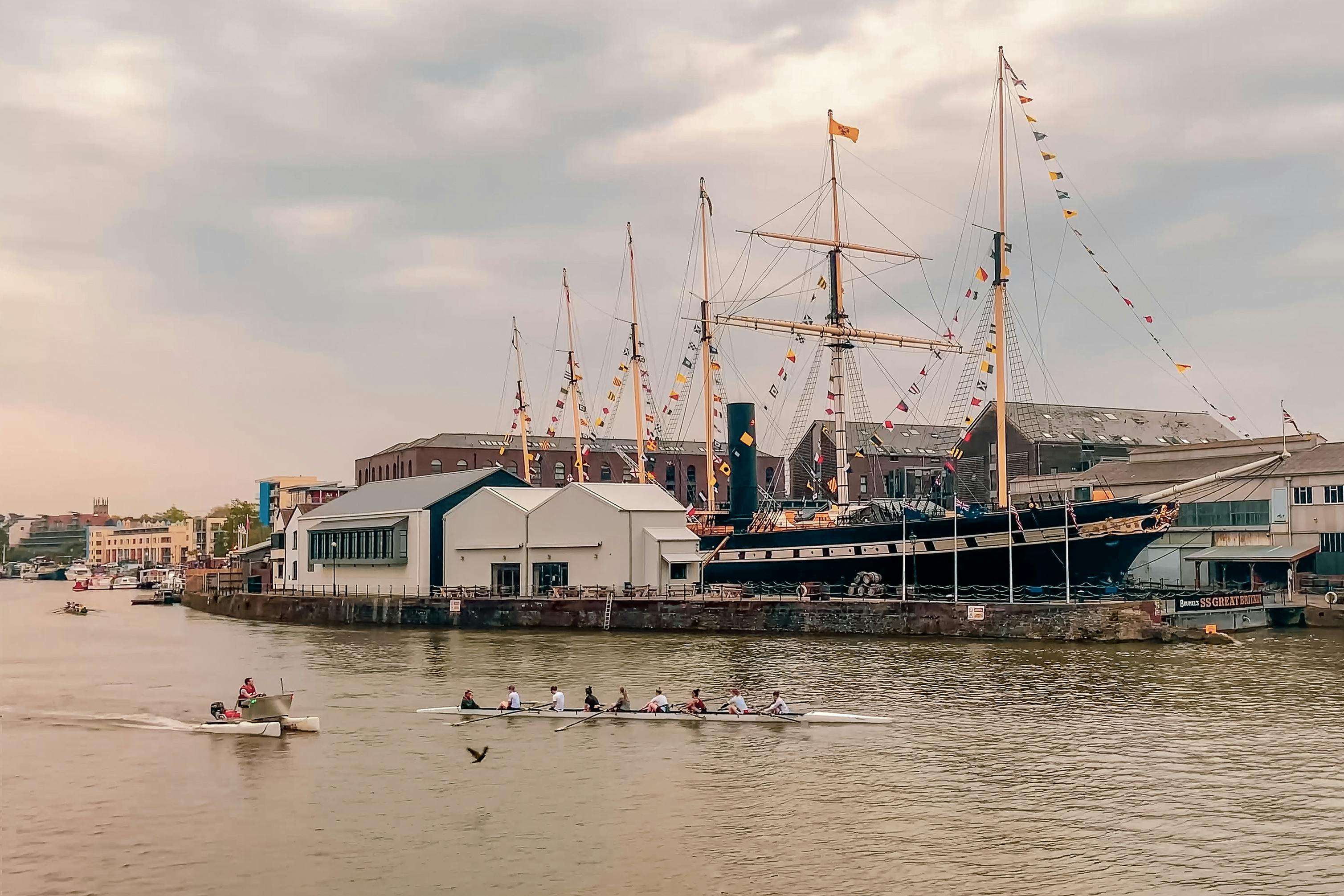
Historic Dockyard and heritage structures. HMS Victory, the Mary Rose Museum, HMS Warrior and the surrounding Georgian dockyard buildings are among the most historically significant structures in the country. Conservation-grade rope access allows inspection and repair work on these irreplaceable assets without the visual and physical impact of scaffold. The Round Tower, Square Tower and other Solent fortifications require periodic stone repair and repointing.
Spinnaker Tower. At 170 metres, the Spinnaker Tower is the tallest accessible structure on the South Coast. Its sail-like form — curved steel and glass panels — requires specialist rope access for glazing inspection, cleaning, sealant renewal and structural surveys. The complex geometry rules out conventional cradle systems.
Gunwharf Quays and waterfront commercial. The retail, leisure and residential complex at Gunwharf Quays has modern cladding, glazed facades and elevated walkways requiring regular maintenance. The adjacent residential towers along the waterfront need curtain wall cleaning, balcony repair and sealant renewal.
Southsea seafront. The Victorian and Edwardian terraces along Southsea seafront face the same salt spray and wind exposure as Brighton’s Regency terraces. Stucco facades, bay windows, decorative ironwork and render all deteriorate faster due to coastal weathering. The seafront hotels and guest houses — many now converted to flats — run cyclical exterior maintenance programmes.
D-Day Museum and civic buildings. The D-Day Story museum, Portsmouth Guildhall and the Civic Offices all require periodic facade maintenance. The university campus (University of Portsmouth) has a substantial estate of buildings across the city centre, ranging from converted naval buildings to modern teaching blocks.
Rope Access vs Scaffolding in Portsmouth
Portsmouth’s island geography and military presence create specific advantages for rope access:
Portsea Island space constraints. Portsmouth is one of the most densely populated cities in the UK outside London. Portsea Island’s tight street grid leaves minimal space for scaffold footings, material storage or access towers. Many residential streets have no pavement wide enough for a scaffold base without closing the road entirely. Rope access requires no ground-level footprint.
Naval base security. Scaffold around or adjacent to military buildings creates security vulnerabilities — elevated platforms near sensitive areas, prolonged contractor presence, and materials that could conceal surveillance equipment. Rope access teams arrive, work and depart within the day, with no semi-permanent structure left on-site.
Seafront weather exposure. The Solent coast is exposed to southwesterly gales and salt-laden air. Scaffold on seafront buildings requires enhanced wind loading calculations, additional bracing and inspection after every significant storm. During winter storm sequences, scaffold may be unusable for days at a time. Rope access has no standing structure to manage.
Ferry terminal and port operations. Portsmouth International Port handles cross-Channel ferries to France and Spain. Scaffold around port buildings and terminal infrastructure obstructs vehicle marshalling areas and passenger flows. Rope access allows maintenance without disrupting port operations.
Tourism season pressure. The Historic Dockyard and Gunwharf Quays attract millions of visitors annually. Scaffold on visible frontages during peak season affects visitor experience and commercial performance. Rope access work can be scheduled outside opening hours with no lasting visual impact.
Common Rope Access Projects in Portsmouth
- Naval dockyard maintenance — crane inspection and painting, dry dock wall repair, building facade maintenance and steelwork coating within HMNB Portsmouth
- Heritage fortification repair — stone repointing, render repair and conservation work on the Round Tower, Square Tower and historic dockyard buildings
- Spinnaker Tower maintenance — glazing inspection, sealant renewal, steel structure surveys and cleaning on the 170m landmark
- Seafront facade repair — stucco repair, render patching, decorative ironwork restoration and repainting on Southsea’s Victorian and Edwardian terraces
- Curtain wall maintenance — sealant renewal, glazing replacement and facade cleaning on modern waterfront residential and commercial buildings
- Roof surveys — close-up inspection of slate, tile and flat roofing with photographic condition reports for managing agents and housing associations
- Gutter and rainwater goods — cast iron gutter clearing, downpipe replacement and hopper head repair on period properties
- Bird proofing — netting and spike installation on commercial and residential buildings, particularly along the seafront where gull nesting causes persistent issues
Areas We Cover from Portsmouth
Our rope access operators serve Portsmouth, Southsea, Gosport, Fareham, Havant, Waterlooville and Emsworth. Wider coverage extends across the Solent to Southampton, Chichester, Petersfield, the Isle of Wight and the wider Hampshire coast.